

Views: 0 Author: Site Editor Publish Time: 2026-06-15 Origin: Site


The automotive industry's aggressive push toward electrification drives massive manufacturing changes. Strict emissions reduction goals fundamentally alter structural casting requirements. Legacy tooling approaches no longer suffice for modern EV components. Automakers face intense production pressures today. They demand reliable lightweight automotive parts to offset heavy battery pack systems. Engineers also require tighter dimensional tolerances for sensitive motor enclosures. They must integrate highly complex geometries into single cast pieces. These modern challenges strain traditional die casting methods. You need better tooling strategies to survive this transition. This article provides an evidence-based framework. We help engineering and procurement teams evaluate modern mold capabilities. You will learn how to vet and select a competent tooling partner. You can confidently navigate the shift toward advanced casting technology.
Thermal management is the new bottleneck: Advanced conformal cooling is now mandatory for cycle-time reduction and defect mitigation in complex parts.
Simulation prevents costly revisions: Insist on predictive flow and thermal simulations (e.g., Magmasoft) during the DFM phase before any steel is cut.
EVs dictate specialized parameters: Components like stators and gearboxes require specific aluminum motor housing mold designs that prioritize zero-porosity and strict dimensional stability.
Tool life vs. Upfront Cost: Selecting premium tool steel (e.g., premium H13 or equivalent) and proper heat treatment dictates the true ROI of an automotive HPDC mold.
Automakers rapidly consolidate dozens of parts into single cast nodes. They call this process gigacasting. This consolidation creates enormous business and engineering hurdles. Engineers now demand thinner walls combined with higher structural integrity. These massive components require machines exceeding 6,000 tons of locking force. The molten metal must travel incredible distances inside the die. It cools rapidly along the way. This creates a severe engineering problem for tool designers.
We observe a massive shift in automotive aluminum casting toward advanced structural alloys. Foundries frequently specify materials like structural silafonts (e.g., AlSi10MnMg). These modern alloys offer incredible ductility and yield strength. However, they flow differently than traditional alloys. They shrink aggressively during the solidification phase. They stick tightly to die surfaces. This aggressive shrinkage causes severe premature wear on standard mold steel. Tooling degrades faster than ever before.
Legacy tooling designs fail entirely under these modern pressures. Standard straight-line cooling channels cannot reach critical hot spots in complex geometries. Basic gating designs create turbulent flow. This turbulence leads to unacceptable scrap rates. You will see massive gas porosity in thick sections. You will discover cold shuts in thin walls. Structural automotive applications cannot tolerate these defects.
Legacy vs. Modern Structural Casting Parameters | ||
Parameter | Legacy Tooling | Modern HPDC Tooling |
|---|---|---|
Alloy Type | Standard A380 / ADC12 | Structural Silafonts (AlSi10MnMg) |
Cooling Strategy | Drilled straight-line water lines | 3D-printed conformal cooling inserts |
Porosity Tolerance | Moderate (non-structural parts) | Near-zero (weldable/heat-treatable parts) |
Scrap Risk | Low to Medium | High (without predictive simulation) |
The transition to EV structures forces rapid innovation in die casting mold design. Toolmakers abandon outdated methodologies. They adopt highly technical, data-driven engineering practices.
Tooling engineers move far beyond straight-line drilled water lines. They now utilize 3D-printed mold inserts. They print these inserts using high-grade maraging steel powders. The internal cooling channels hug the complex part geometry perfectly. This ensures uniform temperature distribution across the entire cavity.
This implementation delivers dramatic outcomes. It significantly reduces soldering on the die surface. It minimizes thermal fatigue cracking. Most importantly, it shaves critical seconds off cycle times. Faster cycles directly increase production throughput.
Modern tooling relies on an evidence-oriented approach. Tooling partners must provide robust simulation data. They use advanced software like Magmasoft or Flow-3D. They must prove gate locations before cutting any steel. They must map overflow placements digitally. You cannot rely on physical trial and error anymore.
This digital validation prevents catastrophic air entrapment. It ensures a laminar fill pattern. Visual exterior parts and critical structural nodes demand this exact precision. Simulation eliminates the guesswork from the engineering phase.
Structural components often require welding or heat treatment. Entrapped air expands during heat treatment. This creates surface blisters and ruins the part. Therefore, the mold must support vacuum-assisted high-pressure die casting.
You must perform a strict capability check. The mold requires highly specialized engineering. Designers must include enhanced O-ring sealing around all pins and slides. They must integrate specialized vacuum valves, commonly known as chill vents. These vents extract air rapidly and freeze the metal instantly. This setup achieves the near-zero porosity required for modern automotive parts.
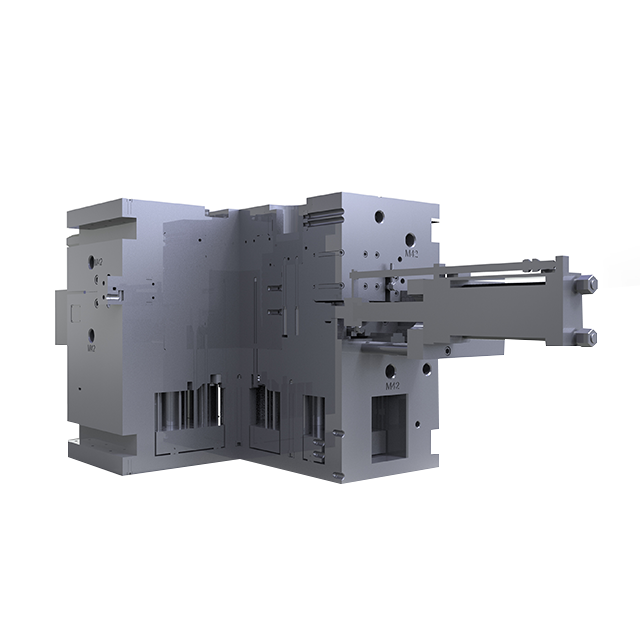
Electric vehicle architectures depend heavily on the electric traction motor. These components introduce severe application complexity. EV motor housings require extremely deep cooling jackets to manage stator heat. They need precise internal diameters to house the electromagnetic components. They also demand strict geometric concentricity across the entire cylindrical body.
Engineers solve these challenges through advanced mold design solutions. They implement robust multi-slide configurations. These slides allow for the extraction of complex exterior geometries. Designers also build precise core pull mechanisms. These mechanisms form the deep internal water jackets.
Thermal management dictates dimensional success here. Tool steel expands significantly at operating temperatures. This expansion shifts the internal dimensions of the mold. Engineers must manage and predict this thermal expansion mathematically. This control maintains tight dimensional tolerances across incredibly long production runs.
You measure success through two strict criteria. First, the final cast component must maintain consistent wall thickness. Second, it must achieve absolute leak-tightness. A porous water jacket will leak coolant. This destroys the electric motor entirely. You cannot compromise on these two factors when sourcing an aluminum motor housing mold.
Specify premium hot-work tool steel for all core pins.
Use thermal imaging during the T0 trial to verify cooling jacket uniformity.
Implement automated spray systems to ensure consistent mold release application.
You must vet tooling manufacturers rigorously. This evaluation framework aids bottom-of-funnel decision-making. You need a partner capable of executing a modern high pressure automotive mold flawlessly.
Engineering Capabilities: Evaluate their upfront engineering support. Do they offer collaborative DFM (Design for Manufacturability)? Early collaboration saves months of costly revisions. They should suggest part modifications to improve metal flow and reduce stress concentrations.
Material Selection: You must verify their die steel supply chain. Demand premium grades of H13 or superior proprietary alloys. Ensure their steel complies strictly with NADCA (North American Die Casting Association) standards. Furthermore, demand certified heat treatment processes. Poor heat treatment destroys even the most expensive premium steel.
Machining Tolerances: Inspect their manufacturing floor. High-end CNC machines matter greatly. Precision EDM (Electrical Discharge Machining) capabilities are non-negotiable. Tight automotive specifications demand micron-level accuracy on parting lines and sealing surfaces.
Quality Assurance & Tryout: Demand complete transparency. Request comprehensive mold flow analysis reports before approval. Demand dimensional CMM (Coordinate Measuring Machine) reports of all first articles. Finally, define a strict optimization loop after the T0 trial. The supplier must correct dimensional deviations quickly.
Verify NADCA compliance for all steel blocks.
Audit the supplier's in-house thermal simulation software.
Review past CMM reports for complex multi-slide tools.
Confirm their access to certified vacuum heat treatment facilities.
Assess their 3D printing capabilities for conformal cooling inserts.
Procurement teams often face pressure to minimize upfront tooling expenses. However, accepting the cheapest quote carries massive technical risks. We call this the trap of the lowest bid. Saving 15% on upfront mold costs often results in a 30% increase in part scrap. It also frequently causes a 50% reduction in overall tool life. Cheap steel cracks early under thermal stress. Poor machining requires constant manual benching on the production floor.
An effective automotive HPDC mold must prioritize maintenance and longevity. Evaluate the design for easy serviceability. Check how quickly technicians can replace wear inserts. Assess the accessibility of core pins. Examine the modularity of gating blocks. Production stops completely when you pull a massive die for bench repair. Modular designs keep machines running longer.
Ignoring the heat treatment certification of the core blocks.
Failing to specify interchangeable inserts for high-wear gating areas.
Accepting a design without a comprehensive thermal balance report.
We must acknowledge a balanced reality regarding advanced tooling. Highly complex molds cost more to repair. Conformal cooled inserts require expensive 3D printing technology. If a conformal insert cracks, you cannot simply weld it. You must print a completely new replacement block. You should factor this technical complexity into your high-volume production planning. The performance benefits heavily outweigh the repair difficulty. However, you need skilled technicians to maintain these advanced assets.
Modern automotive casting requires an entirely new approach to tool engineering. You must balance complex part geometry with extreme thermal and mechanical durability. The shift toward EV architectures leaves no room for outdated gating and cooling strategies.
Use a strict shortlisting logic when evaluating suppliers. Prioritize partners who lead conversations with engineering data. Look for teams who provide advanced simulations and strict steel certifications. Do not base your decision solely on raw production capacity or cheap bids.
Take immediate action on your next project. Require a comprehensive DFM review early in the design phase. Execute an NDA-backed tooling audit before awarding the contract. These proactive steps guarantee the structural integrity of your future automotive components.
A: Tool life varies heavily by alloy and part complexity. You can typically expect 80,000 to 100,000 shots for premium H13 steel before major refurbishment. This assumes proper thermal management and excellent heat treatment. Structural alloys shrink aggressively, causing faster tool wear than standard alloys.
A: Vacuum HPDC requires highly specialized mold engineering. You must enforce much tighter machining tolerances for all parting lines. The design requires specialized vacuum blocks, like chill vents, to evacuate air rapidly. You also need enhanced O-ring sealing around moving pins to prevent pressure loss.
A: Yes, you can generally retrofit conformal cooling into existing tools. Engineers achieve this by swapping standard blocks with interchangeable 3D-printed steel inserts in specific high-heat areas. However, retrofitting carries design limitations. It is always more efficient to design for conformal cooling from the ground up.


