

Views: 0 Author: Site Editor Publish Time: 2025-10-14 Origin: Site


Ever wondered how intricate metal parts are made? The secret lies in casting techniques like Gravity Die Casting (GDC) and Pressure Die Casting (PDC). These methods shape metals into essential products, from automotive components to electronics. In this post, you'll learn the key differences between GDC and PDC, their applications, and how they impact industries relying on aluminum gravity die casting and other materials.
Gravity Die Casting, also called permanent mold casting, is a metal casting process where molten metal is poured into a reusable metal mold. The key feature is that gravity alone pulls the molten metal into the mold cavity. Unlike pressure die casting, no external force pushes the metal inside. This method allows the molten metal to fill the mold steadily and solidify into the desired shape.
The process starts by heating the metal until it melts. Then, the molten metal is carefully poured into the top of the metal mold. Gravity pulls the metal down, filling the cavity slowly and evenly. After the metal cools and solidifies, the mold opens, and the casting is removed. Since the mold is reusable, it can be used repeatedly for multiple castings.
The process can be manual or automatic, depending on production needs. It is simpler than pressure die casting and does not require complex machinery or high-pressure systems.
● Less Porosity: Because the metal fills the mold gently, fewer air pockets form inside, resulting in denser, stronger castings.
● Superior Strength: Cast parts have better mechanical properties due to lower porosity.
● Good Dimensional Accuracy: It produces parts with consistent dimensions and smooth surfaces.
● Heat Treatment Friendly: Castings can often undergo heat treatment to improve strength or other properties.
● Cost-Effective for Small Runs: Lower mold and equipment costs make it ideal for small to medium production volumes.
However, the process is slower than pressure die casting and less suited for highly complex shapes or very thin walls.
Gravity die casting works well with metals that have good fluidity and solidify cleanly. Common metals include:
● Aluminum and Aluminum Alloys: Lightweight, corrosion-resistant, and good strength.
● Zinc: Offers good strength and excellent surface finish.
● Copper and Copper Alloys: Used for electrical and thermal conductivity.
● Magnesium: Lightweight but requires careful handling due to flammability.
Each metal choice depends on the part's application, required strength, and cost considerations.
Pressure Die Casting (PDC) is a metal casting process where molten metal is injected into a mold cavity under high pressure. Unlike gravity die casting, which relies solely on gravity to fill the mold, PDC uses external force to push the molten metal rapidly and precisely into the mold. This method allows for faster production cycles and the creation of parts with intricate shapes and thin walls.
The process involves pouring molten metal into a shot chamber, then a plunger forces the metal into the die cavity at high speed and pressure. The metal solidifies quickly, and the mold opens to eject the finished part. Because of the pressure involved, the metal fills every detail of the mold, producing parts with excellent surface finish and dimensional accuracy.
There are two main types of pressure die casting:
● High Pressure Die Casting (HPDC): This is the most common form, where molten metal is injected at very high pressures (up to 10,000 psi or more). HPDC is ideal for producing complex, thin-walled parts at high volume. It uses cold or hot chamber machines depending on the metal type. HPDC molds are typically made from hardened steel to withstand repeated use under high pressure.
● Low Pressure Die Casting (LPDC): In LPDC, molten metal is pushed into the mold cavity at lower pressures (usually below 100 psi). This method allows for better control of metal flow, reducing turbulence and porosity. LPDC is often used for larger, thicker-walled parts and can produce components with superior mechanical properties compared to HPDC.
● High Production Speed: Rapid injection and solidification enable mass production with short cycle times.
● Complex and Thin-Walled Parts: Pressure ensures metal fills intricate mold details, allowing thin sections and complex geometries.
● Excellent Surface Finish: Parts come out smooth, reducing or eliminating the need for secondary machining.
● Good Dimensional Accuracy: Tight tolerances are achievable, suitable for precision components.
● Material Efficiency: Minimal waste due to precise metal use and potential for recycling scrap.
However, pressure die casting molds are expensive and have shorter lifespans compared to gravity die casting molds. Also, parts may have higher porosity, which can affect mechanical strength.
Pressure die casting works best with metals that have good fluidity and can withstand rapid cooling. Common metals include:
● Aluminum and Aluminum Alloys: Lightweight, corrosion-resistant, widely used in automotive and aerospace industries.
● Zinc: Offers excellent surface finish and strength, commonly used for small intricate parts.
● Magnesium: Very light, used in electronics and automotive applications, but requires careful handling.
● Brass: Used for decorative and mechanical components needing good corrosion resistance.
Each metal choice depends on the desired properties of the final part and production requirements.
The main difference between Gravity Die Casting (GDC) and Pressure Die Casting (PDC) lies in how molten metal fills the mold. GDC relies solely on gravity to pour metal into the mold cavity. The metal flows slowly and steadily, filling the cavity from the top down without any external force. This gentle filling reduces turbulence and air entrapment.
In contrast, PDC uses high or low pressure to inject molten metal rapidly into the mold. A plunger forces the metal into every detail of the mold cavity, allowing for quick filling and solidification. The pressure helps achieve intricate shapes and thin walls that gravity alone cannot fill.
PDC is much faster than GDC. The high-pressure injection allows rapid cycle times, making it ideal for mass production. It can produce thousands of identical parts quickly and efficiently.
GDC is slower because the metal fills the mold naturally by gravity. This process suits small to medium production volumes where speed is less critical. It is often preferred when casting strength and integrity are more important than quantity.
PDC excels at producing complex designs with thin walls and intricate features. The pressure ensures molten metal reaches every corner of the mold, capturing fine details and sharp edges. This makes it perfect for parts requiring tight tolerances and complex geometries.
GDC handles simpler shapes better. While it offers good dimensional accuracy, it struggles with very thin walls or undercuts. It is more suited for parts with uniform thickness and less intricate designs.
GDC parts generally have lower porosity because the metal fills the mold slowly and without turbulence. Less trapped air means denser, stronger castings. This results in better mechanical properties and improved fatigue resistance.
PDC parts often show higher porosity due to the rapid injection and solidification process. This can reduce strength and make parts more prone to defects like gas pockets. However, PDC parts still offer good strength for many applications, especially when design and surface finish are priorities.
Tip: For projects prioritizing part strength and low porosity, choose Gravity Die Casting; for high-volume production with complex designs, Pressure Die Casting is the better option.
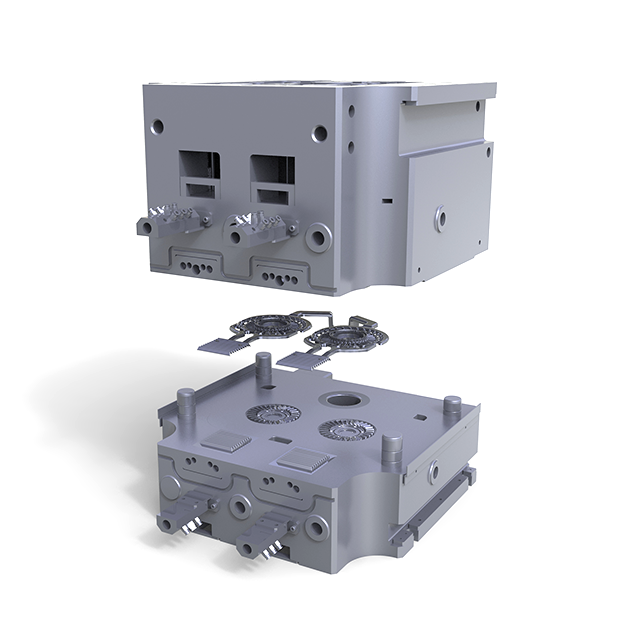
Gravity Die Casting is often chosen for applications where strength, durability, and dimensional accuracy are critical, but production volumes are moderate. It excels in manufacturing parts that require good mechanical properties and can benefit from heat treatment. Typical use cases include:
● Automotive Components: Engine parts, transmission housings, and structural components that need to withstand stress and heat.
● Aerospace Parts: Components requiring high strength-to-weight ratios and consistent quality.
● Industrial Machinery: Housings, brackets, and frames that demand toughness and precision.
● Electrical Components: Connectors and housings made from copper or aluminum alloys for excellent conductivity.
● Marine Applications: Corrosion-resistant parts made from aluminum or magnesium alloys.
Several industries rely on Gravity Die Casting for its ability to produce robust, high-quality parts:
● Automotive Industry: For medium-volume production of durable engine and structural parts.
● Aerospace Industry: Where strength and reliability are paramount.
● Electrical and Electronics: Producing conductive components with precise dimensions.
● Industrial Equipment Manufacturing: For parts that endure heavy use and mechanical stress.
● Marine Industry: Components that resist corrosion and mechanical wear.
Gravity Die Casting offers unique advantages in certain scenarios:
● Strength and Integrity: Since the metal fills the mold slowly, fewer air pockets form, resulting in denser and stronger castings. This is ideal for load-bearing parts.
● Heat Treatment Compatibility: Castings can undergo heat treatment to enhance mechanical properties, which is crucial in automotive and aerospace parts.
● Cost-Effectiveness for Small to Medium Runs: Lower mold costs and simpler equipment make it economical for smaller production volumes.
● Better Surface Finish than Sand Casting: Though not as smooth as pressure die casting, GDC parts require less machining than sand cast parts.
● Material Versatility: Works well with aluminum, zinc, copper, and magnesium alloys, allowing tailoring to specific application needs.
Pressure Die Casting (PDC) is widely used when production demands high volume, complex shapes, and tight dimensional tolerances. Its ability to rapidly produce thin-walled, intricate parts makes it ideal for components requiring precision and repeatability. Typical use cases include:
● Automotive Industry: Engine blocks, transmission cases, and structural components that require lightweight, precise, and strong parts.
● Consumer Electronics: Housings and frames for smartphones, laptops, and other devices where fine detail and smooth finishes are essential.
● Aerospace Components: Parts needing complex geometries and high accuracy, such as brackets and housings.
● Industrial Equipment: Precision parts like gearboxes, valve bodies, and pump components.
● Hardware and Appliances: Small intricate parts like locks, handles, and fittings.
Several industries favor PDC due to its speed and ability to produce detailed parts at scale:
● Automotive: For high-volume production of complex, lightweight parts that improve fuel efficiency.
● Electronics: Producing durable, detailed enclosures and components with excellent surface finish.
● Aerospace: Where precision and weight reduction are critical.
● Telecommunications: Components requiring fine detail and consistent quality.
● Household Appliances: Parts needing good appearance and tight tolerances.
Pressure Die Casting offers distinct advantages in certain scenarios:
● High Production Efficiency: Fast cycle times enable mass production at lower per-part costs.
● Complex Design Capability: Pressure injection fills intricate mold details, allowing thin walls and sharp edges.
● Excellent Surface Finish: Parts often require minimal post-processing, saving time and money.
● Material Utilization: Precise metal usage reduces waste and supports recycling.
● Dimensional Accuracy: Tight tolerances suit applications demanding consistent quality.
However, PDC parts may have higher porosity, so it's best suited where surface finish and design complexity outweigh the need for maximum strength.
When deciding between Gravity Die Casting (GDC) and Pressure Die Casting (PDC), several key factors influence the best choice for a project. These include the production volume, part complexity, desired mechanical properties, budget, and material selection.
● Production Volume: GDC suits small to medium runs because its molds cost less and last longer. PDC is ideal for high-volume production due to faster cycle times despite higher mold costs and shorter mold life.
● Part Complexity and Design: PDC excels at producing complex, thin-walled parts with intricate details. GDC handles simpler shapes better and is limited when it comes to very thin walls or undercuts.
● Mechanical Strength and Porosity: If part strength is critical, GDC often produces denser castings with less porosity. PDC parts may have more porosity, which can reduce strength but still meet the needs of many applications.
● Surface Finish and Post-Processing: PDC parts usually have a smoother surface straight from the mold, requiring less machining. GDC parts may need more finishing, especially for complex surfaces.
● Heat Treatment Requirements: GDC castings can typically undergo heat treatment to enhance mechanical properties. PDC parts, especially from high-pressure processes, are generally not suitable for heat treatment.
● Mold and Equipment Costs: GDC molds are simpler and less expensive, making them cost-effective for lower volumes. PDC molds are costly due to the need to withstand high pressures and rapid cycling.
● Production Costs: PDC offers lower per-part costs at high volumes thanks to automation and speed. GDC may be more economical for smaller batches despite slower production.
● Post-Production Costs: GDC parts might require more machining and finishing, increasing costs. PDC parts often reduce these expenses due to their superior as-cast surface quality.
● Material Suitability: Both methods use similar metals like aluminum, zinc, magnesium, and copper alloys. However, some alloys perform better in one process over the other depending on fluidity and solidification characteristics.
● Design Flexibility: PDC allows for more intricate designs and thinner walls, supporting lightweight and complex parts. GDC is better for robust parts with uniform thickness and simpler geometry.
● Size and Weight of Parts: Larger, heavier parts are often better suited for GDC due to its slower, gravity-driven fill. PDC favors smaller, lighter components that benefit from rapid production.
Gravity Die Casting (GDC) and Pressure Die Casting (PDC) differ in filling methods, production speed, and design complexity. GDC uses gravity for simpler shapes with lower porosity, while PDC employs pressure for intricate, high-volume parts. Superband Mould offers advanced casting solutions, ensuring strong, precise components tailored to industry needs. Their expertise enhances product value through efficient and reliable manufacturing processes.
A: Gravity die casting uses gravity to fill molds, creating denser parts with less porosity, ideal for small runs. Pressure die casting injects metal under high pressure, allowing rapid production of complex shapes with excellent surface finish.
A: Aluminium gravity die casting offers strong, corrosion-resistant parts with good dimensional accuracy and heat treatment compatibility, making it cost-effective for small to medium production volumes.
A: Gravity die casting products provide superior strength and dimensional accuracy, ideal for automotive components needing durability and heat resistance in moderate production volumes.
A: PDC enables fast production of intricate, thin-walled parts with excellent surface finish, ideal for consumer electronics requiring precision and aesthetic appeal.


