





| Quantity: | |
|---|---|


Product Profile
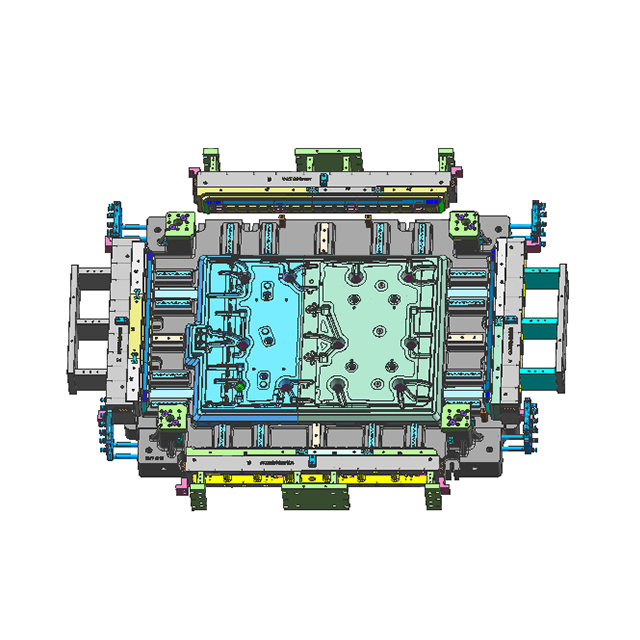
As a premier manufacturer and global supplier of advanced automotive tooling, we present the Single Cavity Low Pressure (LPDC) Mold specifically engineered for EV Battery Housing Bases. Designed to meet the stringent demands of the e-mobility sector, this massive 21-ton tooling solution guarantees exceptional structural integrity, precise dimensional accuracy, and optimal thermal management for oversized new energy vehicle components.
Target Application: Large-scale EV Battery Housing Bases
Casting Technology: Advanced Low Pressure Die Casting (LPDC)
Service Scope: Comprehensive end-to-end design, manufacturing, and mold trial
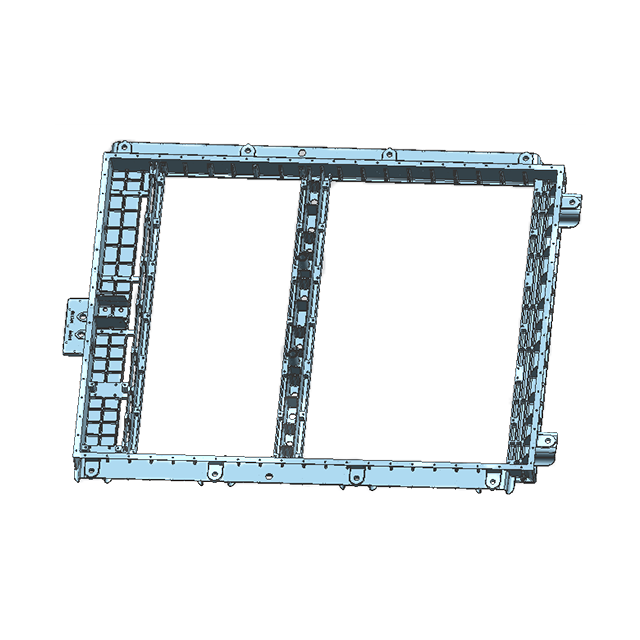
The transition toward electric mobility requires structural vehicle components that deliver uncompromising safety, exceptional thermal regulation, and robust physical protection for sensitive high-voltage battery cells. Our Single Cavity Low Pressure (LPDC) Mold is meticulously engineered to produce the foundational EV battery housing base, a critical structural element that dictates the overall reliability and safety of new energy vehicles. Weighing a formidable 21 tons, this tooling solution represents the pinnacle of metallurgical engineering and precision heavy machining. When inspecting the final cast aluminum base produced by this mold, the visual uniformity of the gleaming surface and the solid, dense acoustic resonance upon impact speak volumes about its internal structural integrity. You are presented with a sleek, near-net-shape component that feels cool and unyielding to the touch, completely devoid of the porous, brittle textures associated with inferior casting methods.
By leveraging the low-pressure die casting method, this mold facilitates a smooth, bottom-up filling process that eliminates turbulent flow and air entrapment. This translates to a final aluminum housing with a dense, uniform internal microstructure. The resulting battery enclosure delivers superior hermetic sealing, which is absolutely crucial for protecting internal battery packs from moisture intrusion, road debris, and harsh environmental conditions. Every internal contour, cooling channel, and ejector pin placement within the mold has been optimized through rigorous simulation. This ensures that the resulting cast part consistently meets the stringent crash-test ratings, vibration-resistance standards, and lightweighting goals required by top-tier automotive assembly lines, ultimately safeguarding the end-user while enhancing vehicle range.
Understanding the exact technical parameters of your tooling is essential for seamless integration into your existing foundry operations and production lines. The specifications detailed in the table below outline the physical dimensions, operational weight, and core technological attributes of our LPDC mold. Designed specifically for the continuous, high-yield production of expansive EV battery housing bases, these parameters reflect a tooling solution built for heavy-duty manufacturing cycles. From the massive 1859x1440×136mm footprint to the sophisticated dual-cooling mechanisms, every technical specification has been calibrated to deliver maximum casting efficiency, minimize cycle times, and ensure consistent, repeatable part quality across thousands of production runs.
| Parameter | Specification |
|---|---|
| Product Name | Single Cavity Low Pressure (LPDC) Mold for EV Battery Housing Base |
| Target Product | EV Battery Housing Base |
| Product Size | 1859 x 1440 × 136 mm |
| Mold Weight | 21 Tons |
| Cavity Type | Single Cavity (One Cavity) |
| Cooling System | Water and Air Cooling |
| Casting Technology | Low Pressure Die Casting (LPDC) |
| Full-Process Service | Product design & CAE, casting process design, mold design & manufacturing, mold trial |
| Industry Application | E-mobility / New Energy Vehicles (NEV) |
| Mold Solution Type | Large & Complex mold solution |
Achieving flawless execution in large-scale aluminum casting requires tooling that goes far beyond basic cavity formation. Our LPDC mold integrates advanced architectural features designed to optimize your production workflow, drastically minimize scrap rates, and elevate the final structural performance of the battery housing.
Exceptional Dimensional Stability: The robust, unyielding 21-ton mold architecture resists thermal distortion during continuous, high-temperature casting cycles, ensuring the expansive 1859x1440mm battery base maintains strict geometric tolerances without warping.
Optimized Flow Dynamics: Precision-engineered gating and runner systems promote a laminar, controlled flow of molten aluminum, preventing oxide inclusions and ensuring a structurally sound, defect-free casting every single time.
Accelerated Cycle Times: The strategic, simulated placement of cooling channels accelerates metal solidification precisely where needed, boosting your daily foundry output while maintaining absolute metallurgical integrity.
Extended Tooling Lifespan: Crafted from premium-grade tool steels and enhanced with specialized surface treatments, the mold actively resists thermal fatigue, heat checking, and aluminum soldering, securing a long-term return on your tooling investment.
Seamless Equipment Integration: Designed with standardized mounting interfaces, the mold allows for rapid installation and alignment within major industrial low-pressure casting machines, reducing setup downtime.
Tackling a 21-ton, ultra-large complex mold requires a foundation of predictive engineering. We emphasize upfront Design for Manufacturability (DFM) combined with advanced Computer-Aided Engineering (CAE) mold flow analysis. By meticulously simulating the pouring system and molten metal flow dynamics, we proactively identify and eliminate forming risks before cutting a single piece of steel. This guarantees that the massive dimensions of the battery housing achieve exact structural strength and dimensional precision.
Comprehensive CAE fluid and thermal simulation to eliminate cold shuts and misruns.
Intelligent gating design tailored specifically for large-surface-area aluminum flow.
Rigorous stress-testing of the 21-ton mold structure to ensure longevity under high clamping forces.
New energy battery housings feature expansive surface areas and thin walls, making heat dissipation during the casting process a monumental challenge. To combat this, our mold incorporates a highly sophisticated composite "Water + Air" cooling system. This precise thermal balancing acts quickly to extract heat from critical zones, effectively shortening the molding cycle while preventing common casting defects.
Dual-media cooling (water and air) for targeted temperature control across different mold thicknesses.
Significant reduction in shrinkage porosity and thermal warping in the final cast part.
Dynamic thermal equilibrium maintenance, which directly extends the operational lifespan of the mold components.
Prevention of hot spots that could compromise the mechanical properties of the aluminum alloy.
The e-mobility sector places zero tolerance on moisture intrusion. Battery housings demand extreme high density and flawless airtightness. The Low Pressure Die Casting (LPDC) process is uniquely suited for this, utilizing a smooth, bottom-up filling mechanism under controlled pressure. This methodical filling prevents the turbulent mixing of air and molten metal, resulting in an exceptionally dense internal structure.
Achieves an ultra-low porosity rate of less than 1%, ensuring maximum structural density.
Guarantees exceptional hermetic sealing, passing the strictest waterproof and leak-proof tests.
Enhances the overall mechanical yield strength and elongation properties of the battery base under complex driving conditions.
Automotive supply chains require absolute certainty regarding component safety. We demonstrate an uncompromising commitment to quality through a stringent, multi-layered inspection system. Every mold and its corresponding trial products are subjected to rigorous Non-Destructive Testing (NDT) to ensure they meet and exceed IATF 16949 automotive industry standards.
X-Ray & CT Scanning: Deep internal structural analysis to detect microscopic voids or inclusions.
Leak Testing: High-sensitivity pneumatic testing to guarantee the airtightness of the battery enclosure.
CMM Inspection: Coordinate Measuring Machine verification to ensure the 1859x1440mm dimensions are accurate to the micron.
Material Spectrometry: Verifying the exact chemical composition of the cast alloy for performance consistency.
Traceability: Full documentation and tracking for every stage of the manufacturing process.
Weight reduction is the key to unlocking greater driving range in electric vehicles. Our mold is expertly optimized to process high-thermal-conductivity and high-strength aluminum alloys, such as A356 and AlSi10Mg. By refining the mold's internal geometry, we empower automotive manufacturers to achieve extreme lightweighting without sacrificing the critical safety and thermal management capabilities of the battery pack.
Perfect compatibility with advanced, lightweight aluminum alloys (A356, AlSi10Mg).
Enables thinner wall designs while maintaining high impact resistance for battery protection.
Optimizes the thermal conductivity of the final part to assist in battery heat dissipation.
Efficiency on the foundry floor extends beyond the casting press. Our LPDC mold boasts exceptional near-net-shape capabilities, meaning the cast product emerges incredibly close to its final required dimensions. This high-precision output drastically reduces the time, labor, and material waste associated with secondary CNC machining. Furthermore, the pristine surface finish is primed for immediate post-processing.
Minimizes CNC machining allowances, saving significant processing time and tool wear.
Produces a smooth, uniform surface texture free from deep flow marks or cold laps.
Optimized for seamless downstream surface treatments, including anodizing, powder coating, and electrophoretic deposition (E-coating).
Enhances the final anti-corrosion properties of the battery housing through superior surface integrity.
Managing multiple vendors for a single critical component introduces unnecessary risk and delays. We provide a comprehensive "turnkey" engineering solution that covers the entire lifecycle of the tooling project. From the initial spark of product design to the final, successful mold trial, our integrated approach significantly lowers supply chain management costs, eliminates communication barriers, and ensures on-time project delivery.
Seamless transition from Product Design & CAE directly into Mold Manufacturing.
In-house casting process design tailored to your specific foundry equipment.
Comprehensive Mold Trial services to prove out the tooling before shipment.
Dedicated technical support to ensure rapid ramp-up to mass production at your facility.
Selecting the right manufacturing partner for mission-critical automotive tooling is a strategic decision that impacts your entire production timeline and vehicle safety ratings. As a dedicated supplier with deep, proven roots in the e-mobility sector, we bring unparalleled metallurgical expertise to every project. We understand the high stakes involved in producing large-scale structural components and have tailored our operations to mitigate risks, streamline procurement, and guarantee manufacturing success.
Proven Industry Pedigree: Decades of specialized experience supplying highly complex tooling solutions exclusively to the demanding new energy vehicle sector.
In-House Trial Capabilities: We do not just build the mold; we prove it. Our comprehensive mold trial services ensure the tooling is fully production-ready before it ever reaches your facility floor.
Transparent Communication: Dedicated project engineering managers provide continuous, detailed updates, from initial CAE flow analysis to final CMM dimensional reports.
Uncompromising Standards: Every procedure is strictly governed by automotive quality management systems, ensuring your exact specifications are met with zero deviations.
Global Support Network: Rapid response technical assistance to ensure your production lines maintain maximum uptime and efficiency.
Q: How does the dual water and air cooling system specifically improve the casting of such a large battery housing?
A: Large surface areas like the 1859x1440mm battery base are prone to uneven cooling, which causes warping and internal stress. Our dual system uses water channels for rapid heat extraction in thick-walled sections and air cooling for gentle temperature regulation in thinner, delicate areas. This precise thermal balance ensures uniform solidification, drastically reducing cycle times while preventing dimensional distortion.
Q: Can this LPDC mold accommodate different high-strength aluminum alloys required for EV lightweighting?
A: Yes, the mold is specifically engineered to handle advanced, high-fluidity aluminum alloys such as A356 and AlSi10Mg. The gating system and thermal management controls are calibrated to accommodate the specific melting points, shrinkage rates, and flow characteristics of these lightweight, high-strength materials, ensuring optimal mechanical properties in the final cast.
Q: What precise steps are taken to ensure the dimensional accuracy of a massive 21-ton mold?
A: Maintaining accuracy on a 21-ton block of steel requires extreme precision. We utilize heavy-duty, 5-axis CNC machining centers to cut the cavities with micron-level precision. Post-machining, the entire mold assembly undergoes rigorous CMM (Coordinate Measuring Machine) inspections to verify that every contour, mounting point, and cavity dimension aligns perfectly with the original CAD data.
Q: How does the low-pressure die casting process benefit the hermetic sealing of the battery base?
A: Traditional high-pressure casting can trap air, creating microscopic pores. LPDC forces molten aluminum upwards against gravity at a slow, controlled pressure. This laminar flow pushes air out ahead of the metal, resulting in a highly dense, non-porous microstructure (porosity <1%). This density is what guarantees the battery housing remains completely leak-proof and waterproof under severe conditions.
Q: What exactly is included in the full-process turnkey service for this tooling solution?
A: Our turnkey service is a complete, risk-free package. It begins with collaborative product design and CAE mold flow analysis to optimize the part. We then handle the complete mold design, CNC manufacturing, and assembly. Crucially, it includes in-house mold trials where we actually cast sample parts to prove the mold works flawlessly. You receive a fully validated, production-ready mold along with the optimized casting process parameters.


