


Views: 0 Author: Site Editor Publish Time: 2026-06-03 Origin: Site


Producing metal components for consumer appliances requires balancing rapid production scaling alongside strict unit-cost targets. Modern manufacturers face intense pressure to deliver millions of parts swiftly. They must achieve this without compromising structural integrity or cosmetic appeal. Tooling for High-Pressure Die Casting (HPDC) demands significant upfront capital. Choosing the wrong casting method or poorly planned mold design leads to costly defect rates. These defects often manifest as internal porosity and severe warping. You also risk massive unamortized tooling expenses if production unexpectedly halts.
This guide establishes an engineering-first decision framework. You will learn to determine exactly when investing in an HPDC mold for home appliance parts is the most financially and technically viable route. We will also explore the specific physical limitations of the process. This knowledge tells you when to seek alternative casting methods for your manufacturing line.
Volume Thresholds: HPDC tooling becomes cost-effective primarily for production runs exceeding 10,000 units annually due to high initial steel mold costs.
Geometric Sweet Spot: The process is optimal for complex, thin-walled (1mm–5mm) aluminum alloy parts requiring rapid cooling and minimal secondary machining.
The Porosity Trade-off: The high-speed injection that enables thin-wall casting inherently introduces gas porosity risks, making standard HPDC unsuitable for thick-walled, critical load-bearing structural components.
Procurement Logic: Successful supplier selection relies on evaluating a manufacturer's thermal management capabilities and mold defect-mitigation strategies.
Mass-market consumer appliances demand rigorous production schedules. You cannot rely on slow manufacturing processes when fulfilling seasonal demand spikes for washing machines, HVAC units, or refrigerators. HPDC excels here because it offers cycle times measured in mere seconds. Molten metal cools at astonishing rates between 100 and 1000 K/s inside the die. This rapid solidification ensures high throughput. It also creates a fine grain structure within the metal. This structure naturally enhances the overall hardness of the cast component.
Unit cost reduction forms the core of the business case. Your initial investment in a high pressure casting mold is undeniably steep. Premium tool steel and complex machining drive up upfront expenses. However, extreme material efficiency quickly offsets this cost. The process delivers near-net-shape output. You rarely need extensive post-machining operations. Trimming away flash and minor polishing often complete the part. This lean workflow slashes labor costs per unit significantly over a long production run.
Component consolidation presents another major financial driver for home appliance die casting. Traditional manufacturing often forces you to stamp, weld, and assemble multiple small pieces. HPDC allows you to cast highly complex geometries in a single shot. You can integrate structural ribs, mounting bosses, and undercuts directly into one part. This capability dramatically reduces downstream assembly steps. Engineers frequently use it to consolidate multi-piece motor housings, internal brackets, and complex appliance base plates into unified, lightweight components.
You must align your component design strictly with the physical capabilities of the casting process. HPDC shines when specific geometric and material criteria are met. Understanding these engineering parameters prevents costly redesigns.
Thin-wall capabilities define the primary advantage of this process. Modern injection systems force molten metal into narrow die cavities at extreme velocities. Speeds routinely hit 30 to 100 m/s. This intense kinetic energy fills intricate mold sections before premature solidification occurs. The process is ideal for lightweight appliance enclosures. You should target a thickness range between 1mm and 5mm for optimal results. These thin walls reduce overall appliance weight while maintaining necessary rigidity.
Surface finish requirements also dictate process selection. Consumer-facing parts require flawless cosmetics. HPDC delivers excellent "as-cast" surface finishes. You can easily powder coat, paint, or plate these surfaces. Manufacturers rely on this trait for visible elements like premium blender bases and sleek coffee machine chassis.
Dimensional accuracy remains highly consistent across massive production batches. Tight tolerances are non-negotiable for internal electrical enclosures and precision gearboxes. Aluminum alloy parts produced via HPDC hold these tolerances reliably. This consistency minimizes friction in moving appliance parts and ensures proper sealing against moisture.
Finally, alloy suitability plays a critical role. The process works exclusively for non-ferrous metals. Aluminum, zinc, and magnesium dominate the landscape. They offer high strength-to-weight ratios. More importantly, they provide superior heat dissipation. Motor-driven appliances generate substantial internal heat. Aluminum chassis efficiently draw this heat away from sensitive electronics.
Engineering Parameter | Typical HPDC Capability | Appliance Application Example |
|---|---|---|
Wall Thickness | 1.0 mm – 5.0 mm | Lightweight motor enclosures, chassis |
Injection Velocity | 30 – 100 m/s | Intricate cooling fins, thin ribs |
Cooling Rate | 100 – 1000 K/s | High-hardness structural brackets |
Common Alloys | A380, 383, Zinc, Magnesium | Coffee maker bases, heat sinks |
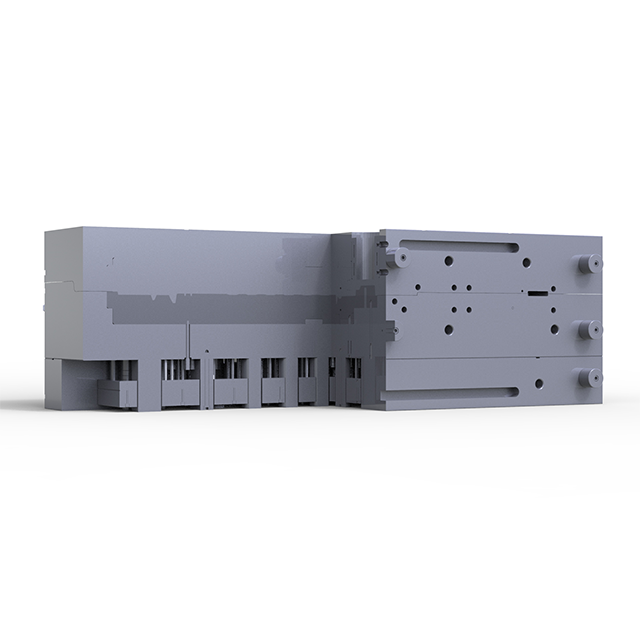
Despite its efficiency, HPDC is not a universal solution. The process harbors a fundamental contradiction known as the speed paradox. You must recognize these limitations early in the design phase to avoid catastrophic part failures.
The Porosity Problem (The Speed Paradox): The same high-speed injection filling thin walls inevitably traps air inside the die cavity. This trapped air creates gas porosity—tiny, round voids inside the metal. These voids weaken the structure. If your appliance part requires high air-tightness, standard HPDC is the wrong choice. Furthermore, you cannot apply high-temperature heat treatments like T6 to these parts. Intense heat causes the trapped gas to expand, creating visible blisters and warping on the part surface.
Thick-Walled Structural Limits: Not all appliance components are thin and lightweight. Some internal parts feature thick cross-sections requiring extreme mechanical strength. These parts demand zero internal voids to prevent fatigue failure. For massive, load-bearing structural components, you should avoid HPDC entirely. Gravity Die Casting (GDC) or Squeeze Casting provides much better internal structural integrity for thick walls.
No Sand Cores Allowed: Many complex castings require enclosed hollow internal cavities. Traditional casting methods use fragile sand cores to form these voids. You cannot use sand cores in HPDC. Typical injection pressures routinely exceed 1000 bar. This immense force instantly crushes sand cores. If your appliance part absolutely requires complex, enclosed hollow internal geometries, Low-Pressure Die Casting (LPDC) is required instead.
The success of your production run depends entirely on tooling quality. A poorly designed aluminum die casting mold guarantees a high scrap rate. Engineers must address several critical design considerations before cutting any steel.
Cavity and Core Integrity: The tool must withstand severe thermal shocks and extreme mechanical stress. You must machine the cavity and core from premium heat-resistant tool steel, such as H13. The die must survive immense clamping forces. Engineers calculate this required force by multiplying the part's projection area by the specific injection pressure.
Advanced Thermal Management: Metal injected at high speeds generates massive heat. Tooling must integrate precise cooling channels to manage this thermal stress. Proper cooling prevents shrinkage porosity. Unlike round gas porosity, shrinkage porosity forms jagged internal voids caused by uncompensated hot spots during cooling. You must maintain consistent die temperatures, typically between 220°C and 300°C for aluminum, to ensure smooth metal flow.
Draft Angles and Ejection: Ejecting a hot, newly solidified part is violent. Proper draft angles are mandatory. You must carefully design strategic parting lines. These choices prevent cosmetic defects like flow marks and soldering. Soldering occurs when molten aluminum chemically bonds to the steel die. It destroys the smooth surface required for consumer-facing appliance exteriors.
Venting and Vacuum Overrides: Trapped air remains your biggest enemy. Advanced molds implement chill vents to aggressively manage air evacuation just ahead of the molten metal front. For highly critical components, you may need vacuum HPDC configurations. Vacuum systems extract air from the cavity milliseconds before injection. This drastically reduces internal porosity and lowers overall reject rates.
Choosing the right manufacturing partner dictates your ultimate success. Do not simply select the lowest bidder. You must evaluate an industrial appliance mold supplier based on their technical capabilities and quality control rigor.
First, verify their equipment matches your project. Ensure the supplier operates the correct machinery for your chosen alloy. Aluminum requires cold-chamber machines. Zinc utilizes hot-chamber machines. You must also check their press tonnage. They need adequate locking force to handle your specific component's footprint without the die blowing open during injection.
Next, scrutinize their defect tracking and quality assurance protocols. Visual checks are never enough for high-performance appliance parts. Look for robust, modern inspection methods. Reliable suppliers utilize X-ray and CT scanning to detect hidden internal porosity. They also perform strict leak testing to identify microscopic cold shuts.
To receive an accurate and actionable quote, you must provide a comprehensive data package. Send them your 3D CAD models accompanied by 2D drawings. These drawings must feature strict Geometric Dimensioning and Tolerancing (GD&T) annotations. Specify your exact target alloy and detail all post-casting finish requirements. Clearly state your Estimated Annual Usage (EAU). The EAU determines whether a single-cavity or multi-cavity tool is the most logical investment. Finally, share known failure points or scrap reasons from previous design iterations. This transparency helps the supplier design a better mold from day one.
Sourcing Data Package Checklist | Why It Matters for the Supplier |
|---|---|
3D CAD & Annotated 2D Drawings | Dictates tooling complexity, parting lines, and GD&T needs. |
Target Alloy & Finish Specs | Determines hot vs. cold chamber needs and mold steel grade. |
Estimated Annual Usage (EAU) | Drives the decision between single or multi-cavity tooling. |
Known Failure Points (Scrap History) | Allows engineers to optimize gating and venting proactively. |
Choosing an HPDC mold makes strategic sense when manufacturing high-volume, thin-walled, geometrically complex home appliance parts. The rapid cycle times easily justify the high initial tooling costs for mass-market production. However, it fails when applied to thick-walled components requiring heavy load-bearing strength or T6 heat treatments.
Take action by prioritizing engineering dialogue over pure cost-purchasing. Ensure your chosen manufacturing partner transparently maps their mold flow analysis to your component requirements. Verify they can control thermal stress and manage porosity. Aligning your part design strictly with these physical rules guarantees a more profitable and predictable manufacturing cycle.
A: A380 is ideal for general structural chassis and heat dissipation. It offers an excellent balance of casting ease and mechanical strength. We also frequently use 383, which is optimized for highly complex, thin-walled parts prone to hot cracking.
A: Depending on the tool steel grade and the metal being cast, a well-maintained mold typically yields 100,000 to over 300,000 shots. Zinc molds generally last much longer than aluminum molds due to their significantly lower melting points.
A: HPDC typically utilizes injection pressures between 1,500 to over 25,000 psi (100 to 1700 bar). Higher intensification pressures help compress trapped residual gases. This effectively mitigates the overall size of internal porosity in the final casting.


