

Views: 0 Author: Site Editor Publish Time: 2026-09-10 Origin: Site


Automotive manufacturing is currently undergoing a massive transformation. The rapid transition to electric vehicles demands drastic weight reduction across all platforms. It also requires advanced thermal management and extreme part consolidation. Gigacasting now pushes the boundaries of traditional production methods. These shifts force procurement and engineering teams to confront a tough choice. You must decide whether to adapt legacy automotive tooling platforms. Alternatively, you might invest entirely in a purpose-built electric vehicles EV component casting mold. Trying to modify old tooling often leads to hidden costs and defects. However, brand new custom tooling requires high upfront capital. Making the wrong choice can severely derail your production budget. We designed this article to provide a clear, evidence-based framework for your tooling decisions. We will help you evaluate the technical, financial, and operational tipping points for custom investments. You will learn exactly when custom tooling becomes mandatory to meet strict modern EV demands.
High initial capital expenditure often deters buyers from commissioning custom tools. However, you must look at the exact volume thresholds to find your breakeven point. Custom tooling drastically reduces the piece-price of your castings. It achieves this through optimized cycle times and lower scrap rates. Once your production volume crosses a specific threshold, the high initial CAPEX becomes justified. For high-pressure die casting, this breakeven usually occurs between 30,000 and 50,000 units. Beyond this point, the per-part savings quickly offset the initial tooling investment. You secure long-term profitability by choosing a custom EV component casting mold.
Electric vehicle architectures thrive on part consolidation. Tesla popularized gigacasting, and now the entire industry follows suit. You might face scenarios where you need to combine ten or more stamped parts into one single cast component. A rear underbody is a perfect example. You cannot achieve this extreme consolidation using standard or modified molds. Gigacasting mandates custom tooling from the ground up. It requires massive tonnage capabilities and highly complex runner systems. Custom molds handle the sheer physical scale of these consolidated parts. They ensure proper metal flow across massive surface areas.
Many engineering teams try to save money by modifying standard internal combustion engine molds. This approach often introduces devastating hidden costs. Legacy designs come with several inherent compromises:
Clean-sheet designs eliminate these risks entirely. Purpose-built custom molds feature optimal cooling line placement. They guarantee structural integrity from the very first shot. They prevent the expensive downtime associated with repairing modified legacy tools.
Battery range heavily dictates electric vehicle market success. You must shed excess weight from the vehicle chassis to maximize this range. This demand requires ultra-thin wall geometries. Standard molds struggle to cast thin walls accurately. They often cause severe porosity issues or incomplete fills. A purpose-built EV component casting mold handles high-strength aluminum and magnesium perfectly. Custom runner designs maintain high injection pressures. They ensure the molten metal completely fills ultra-thin cavities before solidifying. This process yields lightweight parts without compromising structural safety.
Electric powertrains generate immense heat during operation. Components like motor housings and battery enclosures require strict temperature regulation. Standard cooling systems simply cannot keep up. You need conformal cooling channels built into your molds. Conformal cooling wraps the cooling lines evenly around complex part geometries. You can only achieve this through custom mold design, often utilizing 3D-printed tool steel inserts. Advanced thermal management directly impacts the lifespan of the cast component. It prevents localized hot spots that lead to micro-cracking.
Electric vehicles lack traditional engine noise. This silence makes NVH (Noise, Vibration, and Harshness) much more prominent to the driver. Every single component must fit together perfectly to prevent rattling. This dynamic demands incredibly tight tolerance thresholds. Custom molds deliver near-net-shape accuracy right out of the press. They eliminate the need for extensive post-machining. Post-machining can introduce internal stress and cause subsequent part warping. By casting parts perfectly to size, you eliminate a major source of NVH issues in the final vehicle assembly.
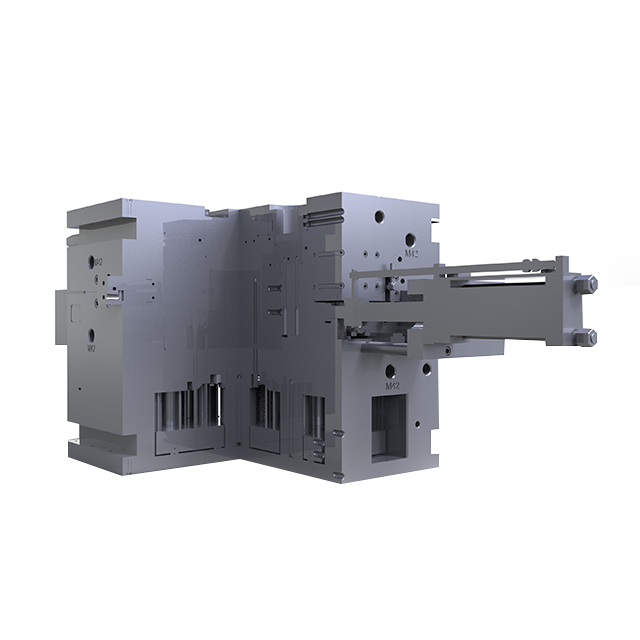
You cannot use standard aluminum grades for high-performance EV parts. The industry relies heavily on specific EV-grade alloys like silafont or self-hardening aluminum. These advanced materials behave differently during the casting process. They have unique shrinkage rates and viscosity levels. Your design must adapt to these specific traits. Defining accurate EV component casting mold specifications ensures your gating designs match the chosen alloy. Proper alloy compatibility prevents cold shuts and flow marks. It ensures the metal fills the die cavity evenly and rapidly.
High-volume EV casting places extreme stress on your tooling. The thermal shock of repeated molten aluminum injection will destroy inferior steel. You must mandate premium-grade tool steels in your specifications.
| Material Grade | Thermal Shock Resistance | Typical Application |
|---|---|---|
| Standard H13 | Good | Low-stress brackets, small covers |
| Premium H13 (VAR) | Excellent | Battery enclosures, structural nodes |
| Dievar / Special Alloys | Superior | Ultra-thin motor housings, gigacastings |
Beyond selecting the right steel, you must apply advanced surface treatments. Premium PVD (Physical Vapor Deposition) coatings protect the mold surface. They resist soldering, where molten aluminum sticks to the steel. They drastically extend the lifespan of your custom tooling.
Many EV components feature highly complex, deep-draw geometries. Battery trays are a prime example. They require deep cavities to house battery cells securely. Ejecting these parts from the mold presents a major challenge. Custom specifications must accommodate these shapes perfectly. You need precisely calculated draft angles to facilitate smooth ejection. Without proper draft, the part will drag against the steel. This dragging causes severe distortion or surface tearing during removal. Carefully planned ejection pin placement ensures the part releases evenly without warping.
You must look far beyond upfront tooling costs when evaluating financial viability. Smart buyers use comprehensive lifecycle modeling to track long-term profitability. You need to evaluate expected maintenance intervals carefully. Consider the total tool life based on the projected number of shots. Custom molds built from premium steel offer significantly longer lifespans. Furthermore, you must evaluate cycle time efficiency. Shaving just two seconds off a casting cycle saves massive amounts of money over a high-volume production run. These long-term operational savings quickly justify the initial investment.
Scrap rates destroy profit margins. This reality becomes financially devastating when you use premium lightweight EV alloys. Every defective part wastes expensive material and valuable press time. Custom mold precision serves as a vital risk mitigation strategy here. A well-designed custom mold fills completely and cools evenly. It drastically reduces porosity and dimensional failures. You minimize your scrap rate by investing in superior tooling geometry. Lower scrap rates directly protect your overall production budget.
Jumping straight into hardened steel tooling carries immense financial risk. You should validate your designs before committing capital to a final production mold. Prototyping offers a safe transition path. You can use soft tooling or precision sand casting to produce initial test units. This phase allows you to test structural integrity and fitment. You can identify potential stress points early. Once you validate the design, you confidently move forward. You can then commission the hardened steel mold knowing the geometry is fully proven.
You cannot trust your project to a generic automotive casting company. Electric vehicle architectures present entirely new challenges. You need to check for proven, EV-specific case studies. A reliable EV component casting mold supplier will demonstrate experience with critical parts. Ask to see their past work on stators, inverters, and battery housings. These parts require strict thermal and structural controls. Generic suppliers lack the nuance needed to handle these specific defect tolerances.
Modern mold making relies heavily on digital twin technology. You should mandate strict simulation protocols before any steel is cut. Follow these evaluation steps:
Suppliers who skip flow simulation gamble with your capital. Digital validation guarantees the physical tool will perform as expected.
Quality assurance is non-negotiable in the automotive supply chain. Evaluate the supplier's compliance with strict automotive standards, particularly IATF 16949. This certification proves they maintain rigorous quality management systems. Furthermore, inspect their processes for dimensional validation. They must use advanced Coordinate Measuring Machines (CMM) and CT scanning. CT scanning looks inside the cast part to detect hidden porosity. Full traceability ensures that if a defect occurs, they can isolate the specific batch immediately.
Commissioning a mold is only the beginning of your production journey. The tooling will eventually require maintenance. Assess the supplier's framework for post-delivery support. Ask about their process for handling engineering change orders (ECOs). Understand their warranty terms regarding tool life and shot counts. A strong partner provides rapid repair services to minimize your machine downtime. They stand by their craftsmanship long after the tool reaches your factory floor.
Commissioning a custom mold is not merely a standard procurement event. It is a strategic engineering partnership that dictates your production success. The shift toward lightweight, thermally optimized EV components makes legacy tooling obsolete for critical parts. Customizing your molds ensures structural integrity, reduces cycle times, and drastically lowers scrap rates. Clear upfront specifications remain your strongest defense against cost overruns. A rigorous supplier vetting process prevents painful production delays. You must demand flow simulations and EV-specific expertise from your partners. Take action today to protect your next production cycle. Encourage your engineering buyers to initiate a thorough tooling audit immediately. Request a comprehensive Design for Manufacturability (DFM) review based on your current CAD models. This proactive step guarantees your tooling investment will meet the rigorous demands of the modern EV market.
A: Manufacturing lead times usually range from 8 to 16 weeks. This timeline depends heavily on the mold's overall size and geometric complexity. Gigacasting molds can take even longer. Variables like tool steel availability, required surface treatments, and multiple rounds of flow simulation can also impact the final delivery schedule.
A: A custom mold's lifespan depends on the tooling material and casting pressure. High-pressure die casting (HPDC) tools made from premium H13 steel typically last between 100,000 and 150,000 shots. Applying advanced PVD coatings and adhering to strict maintenance intervals can push the tool life toward the higher end of this estimate.
A: Yes, but modifications carry high risks and costs. You can easily make "steel-safe" changes, which involve removing steel to add material to the final part. However, adding steel back into the mold requires expensive welding, which compromises structural integrity. This highlights the absolute necessity for upfront DFM validation.


