

Views: 0 Author: Site Editor Publish Time: 2026-06-19 Origin: Site


Electric vehicles (EVs) are driving a rapid industry shift toward extreme lightweighting. Manufacturers increasingly rely on large, complex aluminum components to shed weight and extend battery range. Among these components, the shock tower stands out as exceptionally critical. It demands absolute mechanical integrity to ensure passenger safety. Engineers expect high crashworthiness and strictly enforced dimensional tolerances from every cast part.
However, producing these vital components introduces severe business challenges. Foundries often battle high scrap rates during production runs. Premature tooling failure frequently disrupts manufacturing schedules. Together, these issues drastically inflate the cost-per-part and erode profit margins.
You need a reliable strategy to overcome these manufacturing hurdles. This article provides procurement teams and engineering leads with an evidence-based framework. You will learn how to evaluate complex mold designs accurately. We will help you mitigate expensive defect risks before cutting steel. Ultimately, this guide empowers you to select highly capable tooling partners.
Defect Prediction: Monitoring lead indicators, such as biscuit thickness variations, is critical for predicting porosity and cold shuts before destructive testing.
Mold Durability: Premature thermal cracking is primarily a heat-treatment and design failure; optimal mold hardness must be tightly controlled (e.g., strictly within HRC 46–48).
Supplier Evaluation: Shortlisting an automotive structural parts mold partner requires verifying their capabilities in thermal simulation, vacuum-assisted venting design, and Statistical Process Control (SPC).
Lifecycle Cost: Upfront investment in conformal cooling and high-grade mold steel significantly outpaces the cost of mid-production mold repairs and unexpected downtime.
Designing a reliable chassis structural mold requires navigating intense geometric complexities. Shock towers feature deep cavities and dramatic wall thickness variations. Metal flow must transition smoothly from bulky, thick mounting points to exceedingly thin structural ribs. This transition creates immense fluid dynamics challenges. A poorly designed gating system induces turbulence instantly. Turbulence mixes air into the molten aluminum, ruining part integrity.
Mechanical and crashworthiness demands elevate these challenges further. Modern safety standards require near-zero porosity inside the casting. High integrity ensures the part can undergo rigorous T6 heat treatment without blistering. Furthermore, a sound casting absorbs massive impact energy during a collision. It yields and bends safely instead of suffering catastrophic brittle fracture.
We must strictly quantify the cost of failure here. A substandard mold design destroys overall yield rates. Castings might appear flawless visually but fail internally. Defects discovered post-machining represent massive financial waste. Even worse, rejections found during final X-ray inspection signify maximum capital loss. You lose the material cost, machine time, and processing labor simultaneously.
Understanding defect origins allows us to prevent them actively. Shock tower castings primarily suffer from three critical defect modes. Addressing them early in the tooling design phase is mandatory.
Porosity destroys mechanical strength and compromises heat treatment viability. It typically originates from inadequate mold venting. Turbulent metal flow traps ambient air inside the cavity before it can escape.
You can predict porosity without destroying the part. Track the biscuit thickness variation on your die-casting machines. Abnormal drops in biscuit thickness directly correlate with insufficient metal volume. This shortage signals an immediate, high probability of porosity in the final casting.
Shock towers are large components. They demand long flow distances from the metal melt. Cold shuts occur when two fronts of molten aluminum meet but fail to fuse completely. The melt cools prematurely during its long journey through the cavity. These unfused seams act as sharp stress concentrators. They create prime locations for structural tearing during vehicle impacts.
Many foundries mistake mold cracking for normal tooling wear. In reality, early thermal fatigue is a preventable flaw. It stems directly from poor design choices and flawed metallurgical discipline.
Inadequate fillets create massive stress concentrators in the steel. Improper heat treatment compounds this issue drastically. If the tool steel hardness drops below HRC 45, the risk of premature thermal cracking spikes. Proper automotive aluminum casting demands exceptional tool steel conditioning.
Defect Mode | Root Cause | Predictive Indicator | Prevention Focus |
|---|---|---|---|
Porosity & Entrapped Gas | Turbulent flow, poor venting | Abnormal biscuit thickness | Vacuum venting systems |
Cold Shuts | Premature melt cooling | Low injection speed/mold temp | Optimized runner gating |
Thermal Cracking | Hardness < HRC 45, sharp fillets | Surface heat checking patterns | Strict heat-treatment logs |
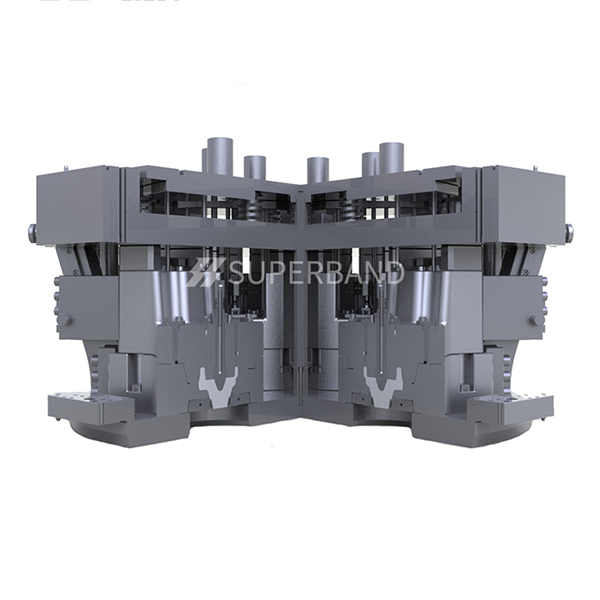
You cannot solve complex defects through trial and error on the factory floor. Success requires a proactive, engineering-first approach. Let us examine the core solutions necessary for a robust HPDC mold for shock tower production run.
Mandate comprehensive mold flow analysis before authorizing any steel cutting. Software simulations predict exact heat concentrations within the cavity block. Engineers use these insights to optimize runner designs. A balanced runner ensures uniform filling, drastically reducing the chance of cold shuts. Simulation removes the guesswork from gating placement.
Structural shock towers must survive T6 heat treatment. Therefore, vacuum-assisted technology is non-negotiable. The mold requires engineering with high-integrity sealing. Specialized venting blocks must evacuate ambient air milliseconds before metal injection begins. This rapid evacuation minimizes trapped gas completely. Without vacuum integration, blistering during heat treatment will ruin your batch.
Shock tower molds face extreme thermal gradients. Strategic thermal management prevents dimensional warping and localized soldering. Standard straight-line water channels cannot reach complex geometric hotspots. You must implement conformal cooling channels. These channels wrap closely around the cavity contours. They extract heat rapidly and evenly, preventing the aluminum melt from soldering to the mold surface.
Never compromise on tool steel quality. Specify premium hot-work tool steels for all cavity inserts. Enforce strict heat treatment protocols aggressively. The heat treater must target a final hardness strictly between HRC 46 and 48. This specific hardness range maximizes the steel's resistance to brutal thermal shock. It prevents the early onset of deep structural cracks.
Selecting the right supplier dictates your project's outcome. You must look past basic tooling quotes. Evaluate potential high pressure die casting tooling partners using a rigorous, evidence-based framework.
Simulation to Reality Correlation: Ask the vendor for historical case studies. Assess whether their past mold-flow simulations actually matched production outcomes. Look for proof comparing their software predictions to actual X-ray defect mapping. Accurate correlation proves their engineering depth.
Process Control Capabilities (SPC): Partner with foundries utilizing closed-loop injection systems. They must demonstrate real-time monitoring capabilities. Look for teams actively tracking clamping force precision and shot-to-shot consistency. SPC integration proves they manage variables tightly.
Inspection and NDT Integration: Your automotive structural parts mold partner needs integrated validation tools. Ensure they perform automated X-ray or ultrasonic inspection in-house. Non-Destructive Testing (NDT) guarantees that every part meets strict mechanical property standards consistently.
Tooling Maintenance and Lifespan Guarantees: Demand transparency regarding expected shot life. Evaluate their recommended maintenance intervals critically. Ask about their specific policies on applying protective coatings. Advanced ceramic or nitride layers extend die life significantly.
Even the finest mold designs face operational risks on the foundry floor. Proper lifecycle management protects your capital investment and ensures uninterrupted production. You must define clear operational thresholds immediately.
Molds naturally experience thermal fatigue over time. You must define the logic for handling this inevitable wear early. Minor surface heat checking often appears after thousands of shots. Technicians can usually tolerate or polish these shallow marks without issue. However, you must establish a hard stopping point. Deep structural cracks near critical forming surfaces or cooling lines dictate mandatory replacement. Welding deep cracks on a structural aluminum die casting mold risks catastrophic, mid-shot failure.
Large structural molds require extended manufacturing lead times. Steel procurement, heavy machining, and complex heat treatments consume months. Always account for this reality in your project schedule. Build generous time buffers for physical tryouts. Expect a multi-stage iteration process from the initial T0 sample to the production-ready T1 sample. Rushing the tryout phase guarantees unresolved defects in mass production.
A perfectly engineered mold fails in a poorly equipped facility. Avoid transitioning a high-end mold to a foundry lacking proper machine tonnage. Insufficient clamping force causes excessive flash and dimensional instability. Similarly, poor thermal control on the die-casting machine negates the mold's conformal cooling benefits. Verify that the production facility perfectly matches the mold's strict engineering requirements.
Procuring a shock tower mold represents a massive, high-stakes capital investment. Upfront engineering, flow simulation, and metallurgical discipline completely dictate the profitability of your production run. You cannot correct a fundamentally flawed mold design by tweaking machine parameters later.
We advise engineering and sourcing teams to completely abandon basic cost-per-tool metrics. Instead, evaluate tooling partners based on their documented defect prevention frameworks. Look for teams exhibiting uncompromising metallurgical discipline.
Take action on your next sourcing project immediately. Shortlist only those vendors willing to share historical SPC data openly. Demand to see their previous NDT validation case studies. Require fully transparent heat-treatment logs for every piece of tool steel they cut. This rigorous approach guarantees safety, consistency, and profitability.
A: Structural parts require T6 heat treatment to meet strict crashworthiness standards. If ambient air remains trapped in the casting, it expands violently during heat treatment. This expansion causes severe surface blisters and compromises internal structural strength. Vacuum systems pull air from the cavity milliseconds before injection, practically eliminating trapped gas.
A: Tool steel hardness requires strict control, specifically targeting between HRC 46 and 48. If the hardness drops below HRC 45, the steel's resistance to thermal shock weakens drastically. This low hardness significantly increases the risk of premature, deep thermal fatigue cracking across the cavity blocks.
A: You must monitor process parameters in real-time. Utilize Statistical Process Control (SPC) specifically to track biscuit thickness on every shot. When biscuit thickness drops below the nominal baseline, it immediately indicates insufficient metal volume entering the cavity. This specific drop flags a highly probable porosity defect.
A: Technicians can easily manage minor surface defects or shallow heat checks. They usually resolve these with localized polishing or minor weld repairs. However, deep structural cracks that reach cooling lines or alter critical dimensional tolerances demand immediate insert replacement. Running deeply cracked molds risks catastrophic blowout failure.


