


Views: 0 Author: Site Editor Publish Time: 2026-06-07 Origin: Site


Investing in a high-pressure die casting mold is a high-stakes capital expenditure. These critical assets often require upfront budgets ranging from $15,000 to well over $150,000. It is a major financial decision for any manufacturing operation. You face immense pressure to get it right the first time.
In the aluminum die casting industry, the mold directly dictates overall production success and long-term unit profitability. A substandard die inevitably leads to premature heat checking, severe die soldering, and unacceptable porosity rates. You cannot afford unexpected production halts. High scrap volumes destroy your margins and delay crucial delivery schedules.
This article provides procurement and engineering teams with an evidence-based framework for evaluating tooling quality. We will help you separate premium engineering from superficial cost-cutting. You will learn exactly what specifications to demand before approving your next project. We outline the crucial steps for successful tool development.
High-quality aluminum die casting molds require premium tool steel (like H13, 1.2343 ESR, or Dievar) paired with strict heat treatments to withstand 650–720°C injection temperatures.
Advanced thermal management and optimized gating systems are non-negotiable for minimizing cycle times and eliminating porosity.
Rigorous mold quality control—spanning from predictive Moldflow analysis to post-machining ultrasonic testing—drastically reduces pre-production iteration cycles.
The lowest initial tooling quote rarely results in the lowest cost-per-part over a 100,000+ shot lifecycle.
Aluminum alloys melt at much higher temperatures than zinc or magnesium. Common grades like A380, ADC12, and AlSi9Cu3 require extreme heat for proper fluid dynamics. The tool must survive repetitive thermal shocks constantly. Temperatures inside the cavity swing violently from 200°C to 700°C in mere seconds. Furthermore, modern cold-chamber machines apply immense injection pressures reaching up to 175 MPa.
Cheap molds fail quickly under these harsh conditions. We regularly observe two primary failure modes when manufacturers cut corners on tooling:
Heat Checking (Thermal Fatigue): Rapid temperature fluctuations create devastating micro-cracks on the die surface. These surface flaws transfer directly to your aluminum casting parts. This creates rough finishes and weakens structural integrity.
Die Soldering and Erosion: High-velocity molten aluminum physically washes away soft tool steel. It can also chemically bond to the cavity surface. This forces operators to halt production frequently for manual cleaning and polishing.
Premium tooling overcomes these exact challenges through superior engineering. A high-quality HPDC mold must guarantee strict dimensional stability over its contracted lifespan. It should facilitate rapid, uniform cooling across complex geometries. It must predictably yield parts holding tight tolerances without endless process tweaking.
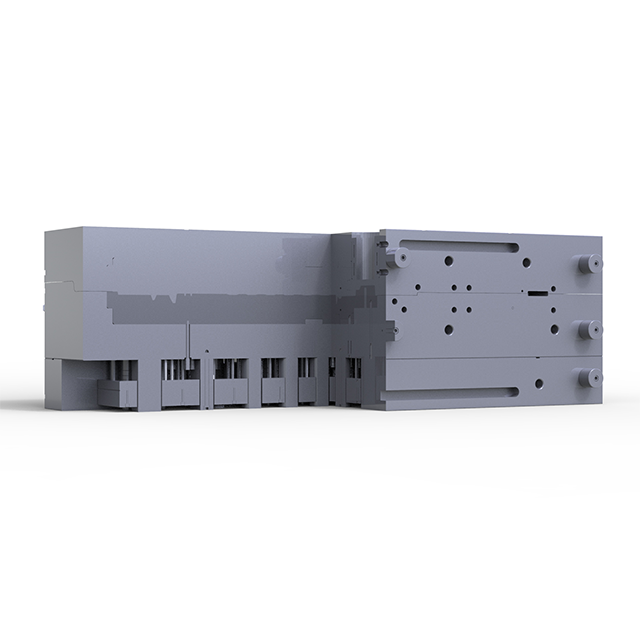
Material selection defines the fundamental durability of your tooling. Standard H13 tool steel provides an adequate baseline for many projects. It works reasonably well for low-to-mid volume runs. However, high-volume production demands a much more robust metallurgical approach.
Demanding applications require electro-slag remelted (ESR) steels. Grades like 1.2344 ESR, 8418, or Dievar offer superior structural purity. They deliver exceptional thermal fatigue resistance. This ensures your aluminum die casting mold survives hundreds of thousands of intense high-pressure shots without cracking.
Steel Category | Common Grades | Best Use Case | Lifespan Expectancy |
|---|---|---|---|
Baseline Tool Steel | Standard H13, 1.2344 | Low-to-mid volume, simple geometry | Up to 50,000 shots |
Premium ESR Steel | 1.2344 ESR, 8418 | High volume, complex automotive parts | 100,000+ shots |
Ultra-Premium | Dievar, 1.2343 ESR | Extreme thermal stress, massive structural parts | 150,000+ shots |
A quality mold requires more than precise CNC milling. It must undergo rigorous metallurgical stabilization. Crucial heat treatment protocols establish the final mechanical properties of the steel:
Vacuum Hardening: This specialized process eliminates internal material stresses. It securely prevents surface oxidation during the high-temperature hardening phase. It ensures uniform core strength.
Surface Engineering: Post-machining treatments add crucial defense layers. Nitriding or QPQ (Quench-Polish-Quench) treatments drastically increase surface hardness. They explicitly mitigate die soldering and physical erosion from the aluminum flow.
Best Practice: Always require comprehensive material certification and heat treatment documentation. Review detailed hardness reports before accepting the physical tool at your facility.
The internal architecture dictates final part density and structural integrity. Fluid dynamics control how die casting tooling directs molten aluminum into the core cavity. High-quality molds utilize highly precise gating systems. They calculate exact flow velocities to prevent turbulent metal behavior and minimize destructive air entrapment.
Cooling channel optimization remains equally critical for success. Molds must feature strategically placed internal cooling lines. Advanced toolmakers often utilize conformal cooling techniques to extract heat uniformly across complex, varying geometries. Uneven cooling causes severe manufacturing issues. It leads directly to hot tearing, volumetric shrinkage, and warped aluminum components.
Top-tier tools integrate sophisticated venting mechanisms and vacuum systems. They feature precisely machined overflow wells located at the end of fill paths. Vacuum assist technologies rapidly evacuate trapped gases milliseconds before the metal arrives. This combination pushes porosity rates well below the standard 3-5% threshold.
Relying on straight-line drilled cooling channels for highly contoured parts.
Undersizing the gate runners, which forces operators to artificially increase injection pressure.
Placing overflow wells symmetrically rather than based on actual flow simulation data.
The best toolmakers enforce strict engineering rules before cutting any raw steel. Design for Manufacturability (DFM) serves as your first line of defense. Engineers optimize wall thicknesses specifically for aluminum flow dynamics. They typically target 1.5mm to 3mm sections. They ensure proper 1–3° draft angles and aggressively eliminate sharp internal corners.
Predictive analysis stops expensive defects early. Comprehensive mold quality control heavily uses simulation software like Magma Flow. It simulates complex fill patterns and accurately predicts cold shuts. It optimizes thermal balance long before physical manufacturing begins. This mitigates the massive risk of discovering major structural defects during the first physical tryout (T0).
Advanced metrology validates the final physical product. Reliable manufacturing partners implement ultrasonic flaw detection directly on the raw steel blocks. They conduct rigorous Coordinate Measuring Machine (CMM) inspections on the finished cavity dimensions. This guarantees overall precision standards reaching demanding CT4-CT6 levels.
Quality Control Phase | Technology Used | Primary Objective |
|---|---|---|
Pre-Machining Validation | Magma Flow / Moldflow | Predict thermal balance and detect potential air entrapment. |
Raw Material Inspection | Ultrasonic Flaw Detection | Identify internal voids or micro-cracks in the unmachined steel block. |
Post-Machining Verification | CMM (Coordinate Measuring Machine) | Verify dimensional accuracy meets CT4-CT6 tolerance standards. |
Evaluating potential tooling suppliers requires rigorous operational due diligence. First, check their capacity and capability matching thoroughly. Ensure they operate the correct cold-chamber machines on-site. They need machine tonnages perfectly matching your specific design requirements. This typically spans anywhere from 250T to 3000T. They must securely test and run the specific mold size under real production conditions.
Next, secure firm die life guarantees in writing. A trustworthy supplier contractually guarantees a specific minimum number of shots. This usually ranges broadly from 50,000 to 150,000 cycles. It depends heavily on your chosen steel grade and the geometric complexity of the casting.
Look well beyond the initial upfront price tag. Weigh the initial high pressure die casting mold quotation against operational efficiency metrics. Consider vital factors like cycle time improvements, long-term scrap rate reduction, and fully included maintenance schedules. Cheap tools routinely cost far more over a full multi-year production run.
Take immediate diagnostic action. Request an initial DFM review from prospective vendors. Ask them for a sample Moldflow simulation from a previous project. You must evaluate their actual engineering depth before issuing any binding purchase order.
Your tooling serves as the exact physical DNA of your final product. Skimping on tool steel grades or ignoring advanced thermal design creates expensive downstream chaos. It directly translates to much higher scrap rates and costly secondary machining operations.
View your tooling as a core strategic asset. It requires rigorous upfront digital validation, completely transparent metallurgical data, and an experienced manufacturing partner. By prioritizing structural integrity and precise fluid dynamics, you secure a highly profitable production lifecycle.
Audit your current supplier's heat treatment documentation and demand raw material certificates.
Require comprehensive Moldflow analysis for all new part designs before approving the final tool layout.
Set strict maximum porosity benchmarks in your next tooling development contract.
Request an on-site equipment audit to verify the supplier's actual cold-chamber machine tonnages.
A: Typically ranges from 50,000 to 150,000 shots, heavily dependent on the tool steel grade (e.g., H13 vs. Dievar), part geometry, and adherence to maintenance protocols.
A: Aluminum has a much higher melting point and is highly abrasive. This requires more expensive, heat-resistant tool steels, advanced heat treatments, and complex cooling systems compared to lower-temperature zinc applications.
A: Strict quality control (Moldflow analysis, vacuum venting, precise thermal management) prevents common casting defects like porosity, cold shuts, and dimensional warping, drastically reducing the need for costly secondary processing.


