

Views: 0 Author: Site Editor Publish Time: 2025-10-15 Origin: Site


Ever wondered how aluminum parts in cars are made? The secret lies in die casting processes like LPDC and gravity casting. These methods shape components like alloy wheels and automobile parts. Understanding their differences is crucial. In this post, you'll learn about LPDC's low-pressure technique and gravity casting's simplicity. Discover which suits your needs best!
Low Pressure Die Casting (LPDC) is a metal casting process mainly used to produce aluminum and its alloy parts. Unlike high-pressure die casting, LPDC applies a low, controlled pressure—typically between 0.3 to 1.5 bar—to push molten metal into the mold from a furnace located below it. This gentle pressure allows the molten metal to flow smoothly into the mold cavity, reducing air entrapment and minimizing defects such as porosity.
The process involves placing a permanent mold above the furnace. When molten metal is forced upward into the mold, it fills the cavity steadily and uniformly. After filling, the metal cools and solidifies, forming a dense and strong component. The process cycle is slower than high-pressure methods, but it yields parts with superior structural integrity.
● Reduced Porosity and Defects: Controlled metal flow minimizes air pockets, resulting in stronger, denser parts.
● Improved Mechanical Properties: Components exhibit higher strength and durability.
● Cost-Effective Tooling: Molds used are reusable and less expensive compared to high-pressure die casting.
● Suitable for Thick, Large Components: Ideal for parts that do not require extremely thin walls.
● Better Surface Finish: LPDC parts often need less post-processing due to smoother casting.
LPDC is widely used in automotive manufacturing, especially for parts requiring strength and moderate complexity. Common applications include:
● Aluminum Alloy Wheels: LPDC produces wheels with excellent strength-to-weight ratios, enhancing vehicle performance.
● Cylinder Heads: The process ensures durability and heat resistance essential for engine components.
● Engine Blocks and Components: LPDC parts withstand high mechanical stress and thermal cycles.
● Aerospace Components: Some aerospace parts benefit from the process’s ability to create dense, defect-free castings.
LPDC strikes a balance between quality and cost, making it a preferred choice for automotive manufacturers producing medium-volume parts that demand reliability and strength.
Gravity casting, also known as permanent mold casting, is a metal casting method where molten metal is poured into a reusable metal mold solely by the force of gravity, without applying external pressure. The mold, typically made from steel or cast iron, is preheated to ensure smooth metal flow and reduce thermal shock. The molten metal fills the mold cavity slowly and evenly, solidifying as it cools.
This process is straightforward and relies on gravity to fill the mold, making it slower than pressure-assisted methods like LPDC. However, it offers good control over the casting quality and is suitable for medium-volume production runs. After solidification, the mold opens, and the casting is ejected for finishing.
● Cost-Effective Tooling: Molds are reusable and less expensive than those for high-pressure casting.
● Good Mechanical Properties: Cast parts show excellent strength and durability due to controlled solidification.
● Reduced Porosity: Slow metal flow minimizes air entrapment, enhancing casting density.
● Suitable for Medium-Volume Production: Ideal for parts that do not require extremely high precision or thin walls.
● Versatility: Able to cast complex shapes with moderate accuracy.
Gravity casting finds extensive use across industries where parts need strength and moderate complexity without the need for rapid mass production. Typical applications include:
● Automotive Industry: Components like brackets, structural supports, pump housings, and valve bodies.
● Industrial Equipment: Manifolds, housings, and machinery parts requiring good mechanical strength.
● Marine and Aerospace: Parts that benefit from dense castings with reliable structural integrity.
● Consumer Goods: Durable metal components in appliances and tools.
This process suits manufacturers aiming for a balance between cost and quality, especially when producing parts with medium complexity and volume.
Low Pressure Die Casting (LPDC) uses controlled, low pressure to push molten metal into the mold from below. This pressure is steady and gentle, allowing the metal to flow evenly and fill the mold completely. The process reduces air pockets and defects, producing dense, strong parts. In contrast, Gravity Casting relies solely on gravity to pour molten metal into the mold. The metal flows more slowly and naturally, filling the cavity without external pressure. This slower flow can increase the chance of surface imperfections but simplifies the process.
LPDC molds sit above a furnace, and molten metal rises into the mold under pressure. Gravity casting uses a preheated metal mold, and molten metal is poured from above, filling the cavity by gravity alone. LPDC is better for complex shapes needing fewer defects, while gravity casting suits simpler, symmetrical parts.
LPDC is more efficient for medium to high-volume production because it reduces defects and improves mechanical properties, lowering the need for rework. However, it requires specialized equipment to maintain pressure and temperature control, which increases initial setup costs. The tooling cost is moderate, and molds last long due to lower wear.
Gravity casting has lower tooling and equipment costs since it does not require pressure systems. It is ideal for medium-volume production runs where high precision is not critical. The process cycle is slower, reducing throughput compared to LPDC. Parts may need more finishing due to surface irregularities, which can add to costs.
LPDC is primarily used for aluminum and its alloys. It produces parts with fewer porosities and better mechanical strength, making it suitable for automotive and aerospace components that endure stress and heat. However, LPDC is less effective for very thin-walled parts or extremely intricate designs.
Gravity casting works well with aluminum, magnesium, and other non-ferrous metals. It excels in producing thicker, less complex parts that require good strength but not tight tolerances. It is limited by slower filling and cooling times, which can affect productivity and surface finish quality.
Note: Choose LPDC for stronger, defect-free parts needing moderate complexity; select gravity casting for simpler, cost-effective components with moderate production volumes.
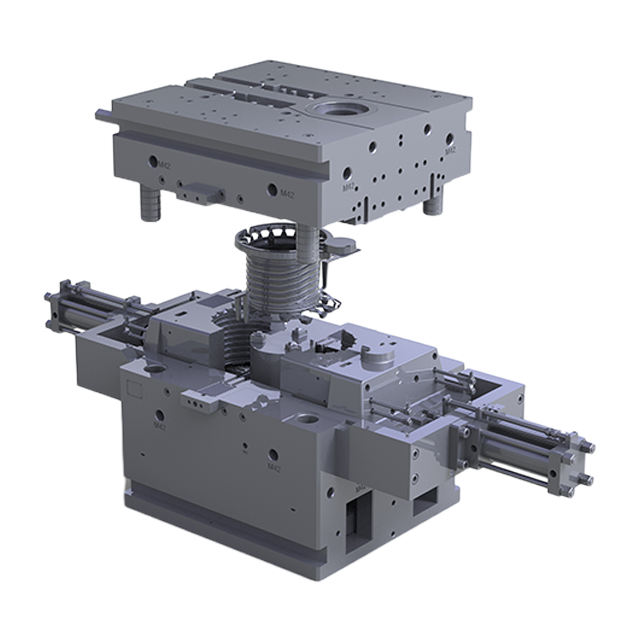
In the automotive industry, aluminum alloy wheels are prized for their light weight, strength, and aesthetic appeal. LPDC (Low Pressure Die Casting) plays a crucial role in producing these wheels. The LPDC process uses a controlled low pressure to push molten aluminum into a permanent mold from below, ensuring the metal fills the mold evenly and reduces air pockets.
This controlled filling results in wheels with fewer defects such as porosity, which can weaken the structure. The mold used in LPDC for alloy wheels is typically made of durable steel and designed to withstand repeated use while maintaining tight dimensional tolerances. Because the molten metal fills the mold steadily, the resulting wheels have a dense microstructure that improves mechanical strength and fatigue resistance.
The LPDC mold design allows for complex spoke patterns and intricate shapes while maintaining consistent quality. This flexibility helps manufacturers create wheels that meet both performance and styling requirements. Additionally, the process supports moderate production volumes, making it ideal for automotive manufacturers balancing quality and cost.
Using LPDC molds for aluminum alloy wheels offers several advantages:
● Enhanced Strength and Durability: The low-pressure casting reduces porosity, creating wheels that can endure road stresses and impacts better.
● Improved Weight Reduction: Aluminum's lightweight nature combined with precise casting allows for wheels that reduce overall vehicle weight, improving fuel efficiency and handling.
● Consistent Quality: The mold's durability and controlled casting process ensure uniformity across batches, minimizing rejects.
● Cost-Effectiveness: Compared to high-pressure die casting, LPDC molds have lower tooling costs and longer lifespans, reducing production expenses.
● Better Surface Finish: LPDC wheels often require less machining and polishing, speeding up finishing processes.
Overall, LPDC alloy wheel molds enable manufacturers to produce high-quality, reliable wheels that meet stringent automotive standards. They support innovation in wheel design while ensuring the performance and safety demanded by modern vehicles.
Gravity casting is widely used to produce various aluminum parts in the automotive sector, especially where strength and moderate complexity matter. Common components made using this process include:
● Brackets and Mounting Supports: These parts hold or support other components, requiring good mechanical strength and durability.
● Pump Housings: Used in fuel, oil, or coolant pumps, these housings must withstand pressure and temperature variations.
● Valve Bodies: These control fluid flow and need reliable structural integrity.
● Structural Components: Frames or supports that contribute to overall vehicle rigidity.
● Manifolds: Air or exhaust manifolds benefit from gravity casting's ability to create thick, durable parts.
These parts usually have thicker walls and simpler geometries, making gravity casting an economical choice. The process ensures consistent quality while keeping production costs manageable.
Gravity-cast aluminum parts positively influence vehicle performance and durability in several ways:
● Enhanced Strength: Slow, gravity-driven metal flow reduces porosity, resulting in dense, strong parts that resist wear and tear.
● Improved Heat Resistance: Components like valve bodies and pump housings maintain performance under high temperatures.
● Weight Reduction: Using aluminum lowers vehicle weight, improving fuel efficiency and handling.
● Cost-Effective Production: Gravity casting balances quality and cost, enabling manufacturers to produce reliable parts without excessive expense.
● Longevity: Durable castings withstand mechanical stresses over time, reducing maintenance needs and enhancing vehicle lifespan.
Though gravity casting parts may not achieve the ultra-thin walls or tight tolerances of high-pressure methods, they offer robust performance where precision is less critical.
When deciding between Low Pressure Die Casting (LPDC) and Gravity Casting, several key factors come into play:
● Part Complexity and Precision: LPDC handles moderately complex shapes better due to controlled metal flow, reducing defects. Gravity casting suits simpler, symmetrical parts where extreme precision is unnecessary.
● Production Volume: LPDC is more efficient for medium to higher volumes, balancing quality and cycle time. Gravity casting fits medium volumes but has slower cycles, making it less ideal for large-scale production.
● Mechanical Properties Required: LPDC parts often have superior strength and lower porosity, ideal for components under mechanical stress. Gravity casting produces parts with good strength but may have slightly more defects.
● Wall Thickness and Size: LPDC works well for thicker parts but can struggle with ultra-thin walls. Gravity casting favors thick, robust parts but is limited in producing thin-walled components.
● Cost Constraints: Gravity casting generally involves lower tooling and equipment costs, making it attractive when budgets are tight. LPDC requires specialized equipment, increasing upfront investment but may reduce rework costs.
● Material Suitability: Both processes primarily use aluminum alloys; however, LPDC is preferred when higher integrity and strength are essential, such as in automotive wheels or engine parts.
● Automotive Alloy Wheels: LPDC is often chosen to manufacture aluminum alloy wheels. The controlled low pressure minimizes porosity, producing wheels that withstand road stresses and fatigue better. This choice improves vehicle safety and longevity.
● Pump Housings and Brackets: Gravity casting suits parts like pump housings or mounting brackets. These components require good strength but not tight tolerances. Gravity casting offers a cost-effective way to produce these parts in moderate volumes.
● Cylinder Heads and Engine Blocks: LPDC is favored for these engine components due to its ability to produce dense, defect-free castings that endure high thermal and mechanical loads.
● Structural Supports: Gravity casting is commonly used for structural supports in vehicles where moderate complexity and strength suffice, keeping costs manageable.
Manufacturers often analyze these factors to match casting methods with product requirements. For instance, a company producing high-performance alloy wheels would invest in LPDC molds and equipment to ensure quality and durability. Conversely, a supplier making structural brackets might opt for gravity casting to keep costs low while meeting strength needs.
LPDC uses controlled pressure for aluminum parts, offering stronger, defect-free components. Gravity casting relies on gravity, suitable for simpler, medium-volume production. Future trends in die casting technologies focus on improving efficiency and precision. Superband Mould excels in providing advanced casting solutions, ensuring high-quality products that meet industry demands. Their innovative approaches in die casting enhance product reliability and performance, offering significant value to manufacturers seeking durable and cost-effective components.
A: Low Pressure Die Casting (LPDC) is a metal casting process using controlled low pressure to fill molds, reducing defects and enhancing mechanical properties in automobile aluminum parts.
A: LPDC uses low pressure for filling molds, resulting in denser parts, while gravity casting relies on gravity alone, suitable for simpler 4 wheeler aluminum alloy wheel designs.
A: LPDC offers reduced porosity and improved strength, making it ideal for manufacturing durable, high-quality 4 wheeler aluminum alloy wheels.
A: LPDC involves higher initial costs but reduces defects, while gravity casting is cost-effective for simpler automobile aluminum parts with moderate precision.


