

Views: 0 Author: Site Editor Publish Time: 2026-09-18 Origin: Site


Selecting the ideal material for a low pressure die casting (LPDC) setup is never just a technical checkbox. This single choice establishes the absolute baseline for unit economics, production cycle times, and long-term part quality. Modern manufacturers rely heavily on this decision to prevent catastrophic production bottlenecks. LPDC applications demand prolonged thermal exposure and precise directional solidification to succeed. Unlike other rapid casting methods, LPDC tooling endures extended holding times at extreme elevated temperatures. This reality makes material choice disproportionately critical when you produce complex structural components. This guide provides engineering and procurement teams a clear framework to evaluate core tooling materials. You will discover how to align rigid performance specifications with your actual production goals. Ultimately, these insights will help you confidently vet manufacturing partners for your next heavy-duty casting project.
Mold material directly dictates thermal conductivity, which controls directional solidification and minimizes common defects like porosity.
Standard materials like H13 tool steel offer durability, while advanced copper-based alloys provide aggressive, localized cooling for complex geometries.
The upfront cost of high-grade mold materials is typically offset by extended tool life and reduced scrap rates in high-volume production.
Selecting a capable supplier requires auditing their ability to match mold material properties with CAE (Computer-Aided Engineering) thermal simulations.
We must frame mold material selection as a primary risk-management decision. Poor material choices often lead directly to premature thermal fatigue. They cause heat checking on the tool surface. They also generate localized hot spots during production. When you rely on a permanent low pressure casting mold, every structural flaw translates to wasted capital. Manufacturers cannot afford sudden tool failures during peak production runs. The initial savings from cheap metals vanish quickly. They turn into massive downtime expenses.
Consider the thermal dynamics involved here. We should briefly contrast the LPDC process against a standard high pressure die casting mold. High pressure systems inject metal rapidly and cool it violently. Conversely, LPDC molds endure much longer holding times at highly elevated temperatures. The metal fills slowly from the bottom up. The tool must sustain high heat loads continuously. This sustained thermal exposure requires superior high-temperature yield strength. Standard tooling metals simply degrade under these extreme conditions. They warp and lose their dimensional stability rapidly.
Material degradation directly impacts your final product yield. Warped cavities ruin dimensional accuracy instantly. Degraded surfaces create poor part finishes. These defects ultimately drive up post-machining costs significantly. You must spend extra money milling away imperfections. Scrap rates climb when parts fail quality inspections. A misaligned material choice destroys your profit margins piece by piece. Manufacturers must select robust materials to guarantee high-yield production cycles.
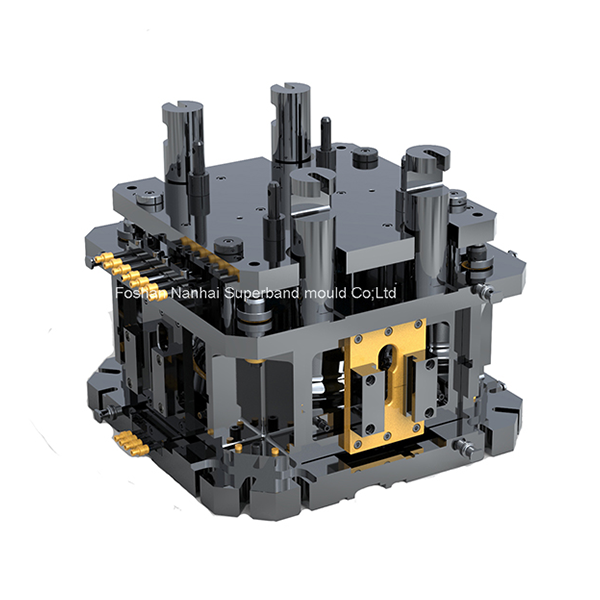
Engineering teams choose from a specific menu of tooling metals. Each category offers distinct operational capabilities. We must understand these categories to make informed procurement decisions.
H13 tool steel dominates the die casting industry. This material provides exceptionally high toughness. It offers excellent resistance to thermal fatigue. Manufacturers consider H13 the gold standard for high-volume applications. It handles high-stress environments beautifully. Upgraded variants exist for even stricter tolerances. These premium steels undergo special vacuum arc remelting processes. This refining removes impurities. Clean steel resists cracking far better during prolonged thermal cycling.
Grey and nodular cast iron offer budget-friendly alternatives. These metals provide good thermal stability overall. However, cast iron delivers significantly lower durability than H13 steel. It cannot survive identical cycle counts. Iron finds its primary use case in lower volume runs. It also works well for less geometrically complex components. You can machine iron faster and cheaper. Therefore, it makes sense for prototype tooling or short-run product lines.
Copper-based alloys deliver exceptional thermal conductivity. They pull heat out of molten metal incredibly fast. Tooling engineers use these materials strategically as inserts. They embed them into massive steel molds. These inserts draw heat rapidly from thick cross-sections. This localized cooling prevents internal shrinkage voids. Copper alloys cost substantially more than standard steel. We reserve them for critical zones requiring aggressive thermal management.
Sand cores represent expendable materials used alongside permanent metal molds. They form a hybrid casting approach. Sand cores are necessary for creating intricate internal cavities. Permanent metal tools cannot form complex undercut geometry. The sand holds its shape during pouring. Operators shake the sand out afterward. This integration allows engineers to cast complex internal channels effortlessly.
Comparison Chart of Core Mold Materials
Material Category | Primary Characteristic | Thermal Conductivity | Best Use Case |
|---|---|---|---|
H13 Tool Steel | High toughness, fatigue resistant | Moderate | High-volume, long-term production |
Cast Iron | Cost-effective, stable | Moderate | Low-volume, simpler geometries |
Copper Alloys | Exceptional heat transfer | Very High | Cooling inserts for thick sections |
Sand Cores | Expendable, customizable | Low (Insulator) | Complex internal cavities |
Choosing a metal requires matching technical features to your desired manufacturing outcomes. We evaluate materials across several critical performance dimensions.
The material's thermal conductivity dictates cooling efficiency. LPDC relies entirely on bottom-up cooling. We call this directional solidification. The mold must pull heat from the bottom extremities first. The cooling front moves upwards toward the riser. This deliberate movement pushes impurities and trapped gas into the scrap riser. A material lacking proper thermal conductivity disrupts this flow. It freezes the metal unevenly. You must select alloys capable of managing this precise thermal gradient.
We must evaluate a material's resistance to soldering. Soldering occurs when molten aluminum chemically bonds to the die surface. It ruins the tool geometry quickly. We also measure erosion resistance over 50,000 or more cycles. Molten metal flows over the same gates repeatedly. It washes away soft tooling metals over time. High-grade H13 resists this washout effect. Scalability depends entirely on robust tool life. You cannot scale production if you must replace dies constantly.
Engineers must balance the raw hardness of the mold material against machining realities. Harder metals resist wear perfectly. However, they require extensive CNC machining time. They consume expensive cutting tools. You must weigh these machining costs against the necessity for precise low pressure casting mold specifications. Achieving tight tolerances on hardened steel takes patience. Soft iron machines quickly but loses tolerance rapidly during actual casting. We must find an economic middle ground.
Different products require distinct tooling strategies. Consider the production of a low pressure casting aluminum auto wheel. Wheels demand highly specific mold material zoning. Engineers typically use a tough steel base for structural support. They integrate specialized alloy cooling pins around the heavy hub sections. This zoned approach ensures flawless structural integrity. Passenger safety depends entirely on eliminating voids in the wheel hub. Material selection becomes a life-saving engineering requirement here.
Defect reduction drives profitability in any foundry environment. Mold materials play the most significant role in eliminating structural flaws.
Porosity remains the primary LPDC pain point. It ruins component strength instantly. Uneven mold temperatures trap hydrogen gas inside the solidifying metal. They also create shrinkage cavities deep inside heavy sections. When the outside freezes too fast, the inside lacks feeding metal. It tears itself apart as it cools. You cannot fix severe porosity after casting. You must melt the part down and start over. This scrap generation destroys production efficiency.
You can prevent these flaws through intelligent material selection. Choosing a mold material capable of uniform heat dissipation changes everything. It prevents the isolated hot spots responsible for micro-shrinkage. Copper inserts act as thermal drains. They pull dangerous heat spikes out of critical zones. Uniform cooling ensures the metal structure remains dense. A dense microstructure yields maximum mechanical strength.
You should never guess your material requirements. Material choice must undergo strict validation before cutting steel. We use advanced CAE software for this purpose.
Digital Modeling: Import the part geometry into MAGMASOFT or Transvalor software.
Material Assignment: Assign specific tooling materials to different mold zones digitally.
Thermal Simulation: Run virtual casting cycles to observe heat distribution.
Defect Prediction: Identify virtual hot spots and shrinkage risks.
Iterative Adjustment: Swap virtual materials or insert copper pins until the thermal gradient stabilizes.
This predictive validation prevents costly mistakes on the foundry floor.
Sourcing tooling requires diligent vendor evaluation. You must audit potential partners across several technical competencies.
Buyers must demand verifiable material certifications from any prospective low pressure casting mold supplier. You need proof regarding steel origins. Demand adherence to strict NADCA (North American Die Casting Association) standards for H13 steel. Substandard steel contains microscopic impurities. These impurities act as crack initiation sites. The tool will fail catastrophically during a production run. Transparent sourcing prevents these expensive surprises entirely.
Assess the vendor's engineering approach carefully. Do they rely on legacy trial-and-error methods? You should avoid shops guessing at cooling channel layouts. Capable suppliers utilize modern thermal simulation exclusively. They use data to dictate material selection. They calculate exact cooling channel trajectories to maximize heat transfer. This engineering rigor guarantees a tool capable of hitting cycle time targets.
Evaluate the supplier's protocols for mold surface treatments. Bare steel wears out quickly. Vendors should apply specialized nitriding treatments. Nitriding hardens the surface significantly. They may also apply proprietary ceramic coatings. These treatments extend the life of the chosen base material drastically. A good supplier provides a comprehensive maintenance schedule. They help you protect your tooling investment long after delivery.
Mold material acts as a foundational investment. It dictates the operational efficiency of your entire LPDC cell. You cannot achieve high yields using substandard tooling materials. The science of directional solidification demands precise thermal management. We must respect the physics involved in heavy-duty casting.
Advise your decision-makers to prioritize thermal management and comprehensive lifecycle economics over raw material acquisition costs. Cheap steel costs less today but drains budgets tomorrow. Take a long-term view regarding tooling investments.
Takeaway 1: Always match the thermal conductivity of your tooling to the specific geometry of your cast part.
Takeaway 2: Use copper alloys strategically to eliminate hot spots and prevent dangerous internal shrinkage voids.
Takeaway 3: Demand digital thermal simulations before approving any final tool designs.
Next Action: Encourage buyers to request historical tool-life data immediately. Ask for thermal simulation case studies when issuing your next batch of RFQs to potential suppliers.
A: H13 tool steel molds generally last between 50,000 and 100,000 cycles. Proper maintenance schedules extend this lifespan significantly. You must apply regular surface treatments like nitriding. Die coatings also prevent molten aluminum from soldering to the steel. The exact cycle count depends heavily on thermal shock management. Sudden temperature changes will crack the steel prematurely.
A: Magnesium requires lower casting temperatures than aluminum. This variance demands distinct alloy choices for the base tooling. Magnesium is highly reactive. Therefore, it requires specialized inert surface coatings. These protective layers prevent chemical soldering. Tooling designers also adjust cooling channel layouts. The thermal conductivity needs change when handling magnesium. You must adapt these details carefully.
A: Yes, you can retrofit copper inserts into existing tooling. Engineers often use this strategy to solve localized porosity issues. However, the retrofit process involves significant engineering challenges. You must machine pockets into the hardened steel carefully. The thermal expansion rates differ between copper and steel. You must calculate these tolerances perfectly to prevent insert loosening during production.


