

Views: 0 Author: Site Editor Publish Time: 2026-07-01 Origin: Site


Creating an aluminum casting mold involves much more than simply shaping metal. It requires a delicate balance between upfront tooling investments, desired surface finish, and overall production volume. You must select the right mold material and fabrication process from the very start. Choosing the wrong approach often leads to severe thermal fatigue and high scrap rates from porosity. It can also cause unjustified capital expenditures. We need to shift focus away from hobbyist backyard setups. Commercial-grade engineering demands precision, reliability, and rigorous metallurgical standards. In this comprehensive guide, you will learn how to evaluate everything from traditional sand casting to high-precision die casting and modern 3D-printed sand molds. We will explore core engineering steps, strict material science requirements, and modern manufacturing advancements. You will gain actionable insights to optimize your production workflow and effectively prevent the most common casting defects.
You must choose the right mold type based on production scale and part complexity. Each method serves a distinct engineering purpose. We evaluate these options by analyzing their initial setup requirements, cycle times, and final part quality.
Designing and cutting an aluminum casting mold requires a strict technical workflow. Moving from a digital concept to a physical tool involves several critical engineering phases. Missing a single step often leads to catastrophic part failure.
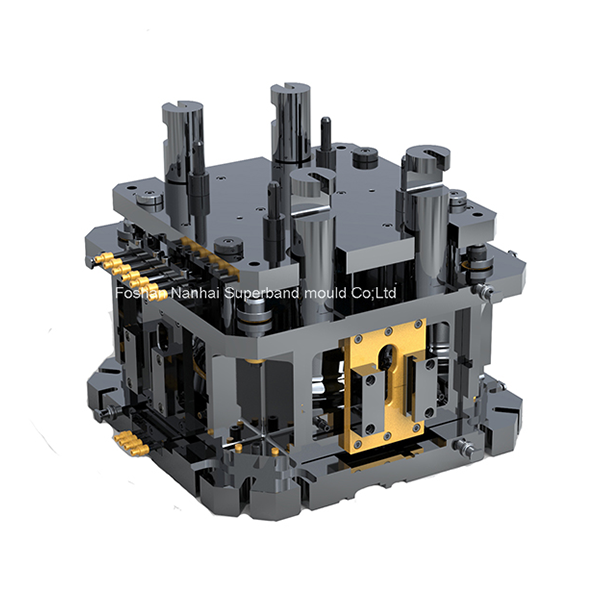
Material science is fundamental to preventing premature tool failure. Aluminum pours at roughly 1,300°F (700°C). The constant heating and cooling cycle destroys weak materials quickly. You must evaluate specific alloys based on expected cycle counts and operational pressures.
H13 Tool Steel stands as the undisputed industry standard for high-pressure injection applications. It offers exceptional hot hardness. It strongly resists thermal checking, which manifests as micro-cracking from repeated thermal shock. Foundries follow strict heat-treatment protocols, such as NADCA guidelines, to maximize the lifespan of H13 blocks.
Cast Iron, specifically gray or ductile iron, dominates gravity-fed permanent mold applications. It handles thermal shock remarkably well. It also remains highly cost-effective compared to premium tool steels. However, cast iron lacks the tensile strength required for high-pressure injection. It performs best in slow, gravity-assisted environments.
Graphite serves specialized, low-volume permanent mold scenarios. It is highly machinable and naturally self-lubricating. Parts release easily without aggressive coatings. Unfortunately, graphite degrades much faster through oxidation when exposed to high temperatures. You typically reserve it for highly specialized, short-run manufacturing.
Understanding the operational lifecycle helps justify material expenditures. Below is a standard comparison detailing expected performance metrics.
| Mold Material | Primary Application | Estimated Lifespan (Shots) | Relative Upfront Cost | Thermal Fatigue Resistance |
|---|---|---|---|---|
| H13 Tool Steel | High-Pressure Die Casting | 100,000 - 150,000+ | Very High | Excellent |
| Gray / Ductile Iron | Gravity Permanent Molds | 20,000 - 50,000 | Moderate | Good (Low Pressure Only) |
| Graphite | Specialty Low-Volume | 500 - 2,000 | Low to Moderate | Poor (Oxidizes rapidly) |
| Resin/Sand | Prototyping | 1 (Expendable) | Very Low | N/A |
Additive manufacturing bridges the gap between traditional craftsmanship and rapid deployment. 3D printing accelerates the tooling process, allowing engineers to bypass lengthy conventional fabrication steps.
Binder jetting technology allows foundries to print sand molds directly from digital CAD files. This process completely eliminates the need for physical wooden patterns. It proves ideal for highly complex geometries, such as automotive intake manifolds. We frequently see engineers utilize this technique to validate an initial aluminum wheel mold prototype before committing to expensive CNC steel tooling. It slashes lead times from weeks to mere days.
Printed wax patterns are modernizing traditional investment casting. Instead of machining an aluminum master mold to inject wax, engineers print the sacrificial wax pattern directly. This hybrid approach supports rapid design iterations. You can test multiple part variations simultaneously without modifying any physical master tooling.
Direct Metal Laser Sintering (DMLS) creates advanced permanent mold inserts. Engineers print solid steel components featuring conformal cooling channels. These internal channels follow the exact geometric contour of the part. Traditional straight-drilled water lines cannot achieve this proximity. Conformal cooling drastically reduces cycle times and eliminates localized hot spots, yielding superior part integrity.
Even perfectly designed molds encounter operational realities on the foundry floor. Troubleshooting requires an evidence-oriented approach to identify and mitigate risks early. Implementing strict process controls prevents minor issues from escalating into complete production halts.
Mold soldering remains a persistent threat. It occurs when molten aluminum chemically reacts and bonds with the steel cavity. Operators must implement strict pre-heating protocols. Elevating the mold temperature to 300°F–500°F before pouring prevents premature freezing and sticking. Consistent application of high-quality release agents provides the necessary chemical barrier.
Thermal fatigue, commonly called heat checking, destroys mold surfaces over time. The constant expansion and contraction create network-like micro-cracks on the steel. These cracks transfer directly to the cast part as raised fins. Proper stress-relieving heat treatments during the manufacturing phase delay this degradation significantly.
Misruns and cold shuts happen when the metal freezes before completely filling the cavity. This usually points to improper flow velocities or inadequate metal temperatures. Redesigning the gating system offers a permanent fix. Alternatively, utilizing a low pressure casting mold setup ensures a steady, controlled, upward fill. This method pushes metal smoothly against gravity, eliminating turbulence and ensuring complete cavity packing.
Scaling production forces enterprise teams to make a critical decision. You must decide whether to build capabilities internally or partner with specialized external vendors. This choice heavily influences your operational agility and product launch timeline.
Keep operations in-house during early R&D phases. Proof-of-concept testing relies heavily on speed. Printing sand molds or machining basic resin patterns internally allows your engineering team to iterate rapidly. It keeps intellectual property secure while validating core functional designs. However, managing high-volume foundry operations internally demands immense capital and regulatory compliance.
Transition to a dedicated tooling vendor when you hit high-volume production benchmarks. Commissioning a multi-cavity aluminum automotive mold requires specialized 5-axis machinery and deep metallurgical expertise. Partnering with external experts ensures you receive a highly durable aluminum casting mould capable of holding tight geometric tolerances over hundreds of thousands of cycles.
Evaluate vendors strictly on their technical infrastructure. Look for partners who utilize advanced flow simulation software. They must demonstrate strict metallurgical QA processes, including ultrasound and X-ray inspection. Furthermore, prioritize vendors offering transparent maintenance contracts. Proper maintenance guarantees your tooling remains operational throughout its projected lifespan.
| Evaluation Criteria | In-House Production (Prototyping) | Outsourced Vendor (Mass Production) |
|---|---|---|
| Core Advantage | Rapid iteration and absolute design secrecy. | Access to premium tool steel and 5-axis CNC. |
| Ideal Mold Types | 3D Printed Sand, Resin, Soft Aluminum. | H13 Steel Die Cast, Iron Permanent Molds. |
| Capital Risk | Low tooling cost, high labor/time sink. | High upfront tooling cost, guaranteed part yield. |
| Engineering Focus | Validating part geometry and functionality. | Maximizing cycle times and thermal management. |
Making a reliable tool relies entirely on your end-use application. Moving a concept from a digital file to a physical product requires careful material selection and strict process control. You must transition intelligently from low-cost sand casting during prototyping to capital-intensive, high-yield permanent steel tools for commercial viability. Shrinkage allowances, gating architectures, and thermal fatigue resistance dictate ultimate success.
Evaluate your production volume carefully before committing to a specific tooling method. Leverage modern 3D printing advancements to reduce initial iteration cycles. When scaling for mass production, prioritize robust materials like H13 tool steel. We highly encourage you to request a comprehensive manufacturability review based on your specific CAD files. Consulting with experienced tooling engineers early will streamline your launch and eliminate costly redesigns down the line.
A: The optimal material depends strictly on your process. H13 tool steel serves as the industry standard for high-pressure die casting due to its exceptional thermal fatigue resistance. Cast iron works best for gravity permanent molding. For fast, low-cost prototypes, green sand or resin-bonded sand remains the most practical choice.
A: A well-maintained permanent cast iron mold typically yields between 20,000 and 50,000 shots. Premium H13 steel dies used in high-pressure environments can exceed 100,000 to 150,000 shots. Lifespan relies heavily on proper pre-heating, consistent lubrication, and routine stress-relieving heat treatments.
A: No. Using standard plaster of Paris poses a severe safety risk. Plaster naturally traps and retains moisture. When exposed to 1,300°F molten aluminum, this trapped moisture vaporizes instantly, causing violent steam explosions. You must use specialized, moisture-free ceramic investment casting materials instead.
A: A pattern is a physical replica of the final part, often made from wood, plastic, or wax. You use the pattern to shape the cavity. The mold is the surrounding structure (like compacted sand or machined steel) that contains this hollow cavity. You pour the metal into the mold, not the pattern.
