

Views: 0 Author: Site Editor Publish Time: 2026-09-22 Origin: Site


Manufacturers constantly face a difficult tooling dilemma. You must balance upfront capital expenditure against per-part cost, lead times, and total production volume. Choosing the wrong tooling path wastes money. It also delays critical product launches. A custom aluminum mold acts as the critical bridge between rapid prototyping and high-volume steel production. Aluminum tooling offers superior thermal conductivity. It also provides significantly faster machining times. However, we must view this technology objectively. It is not a blanket replacement for P20 or H13 steel in every single scenario. This article provides a concrete framework for evaluating your tooling options. You will learn when to invest in aluminum tooling. You will discover how to define your exact technical requirements. Finally, we will show you how to vet manufacturing partners confidently. Our goal is to help you mitigate risk and accelerate your next product launch.
Smart tooling decisions rely on understanding precise financial thresholds. We call this specific operational window the "bridge tooling" sweet spot. Aluminum tooling heavily out-performs 3D printed molds. 3D printing creates excellent visual prototypes, but printed resins lack the durability required for real injection pressures. On the other end of the spectrum, hardened steel molds last forever. Unfortunately, steel costs too much upfront for mid-volume projects. Aluminum sits perfectly in the middle. If you plan to produce between 1,000 and 50,000 parts, aluminum usually represents your most profitable choice.
Let us examine the return on investment model. Machining aluminum blocks requires less aggressive cutters and fewer total machine hours. Lower machine time directly reduces your upfront tooling cost. This frees up significant capital early in your project lifecycle. You can redirect this saved capital toward marketing or further research. The overall mold lifespan certainly falls shorter than a steel counterpart. However, the immediate cost savings often justify this trade-off.
Time-to-market advantages present another compelling reason to choose aluminum. Aluminum is much softer than tool steel. This physical property allows CNC spindles to run at extremely fast feed rates. Cutters remove material rapidly without breaking. Furthermore, you rarely need post-machining EDM (Electrical Discharge Machining) to achieve fine cavity details. EDM burns away metal very slowly. Skipping the EDM phase saves weeks of production time. You also bypass time-consuming heat treatments entirely. You get finished parts into your customers' hands much faster.
Modern consumer markets change quickly. Consequently, engineers frequently update product designs. Modifying a hardened steel tool is terribly difficult and expensive. Conversely, modifying aluminum is remarkably simple. Welders can add new material onto the block easily. Machinists then re-cut the cavity geometry to match your new CAD file. This inherent flexibility makes aluminum perfect for agile manufacturing environments.
Different manufacturing processes demand entirely different tooling strategies. You must match the material to the method. Injection molding handles aluminum very well, provided you select the correct plastic resins. Polymers like Polypropylene (PP), Polyethylene (PE), and ABS flow gently into the cavity. They cause minimal surface wear. You must strictly avoid highly glass-filled or abrasive materials. Fiberglass additives act like aggressive sandpaper inside the mold. They degrade aluminum cavities quickly and destroy your part tolerances.
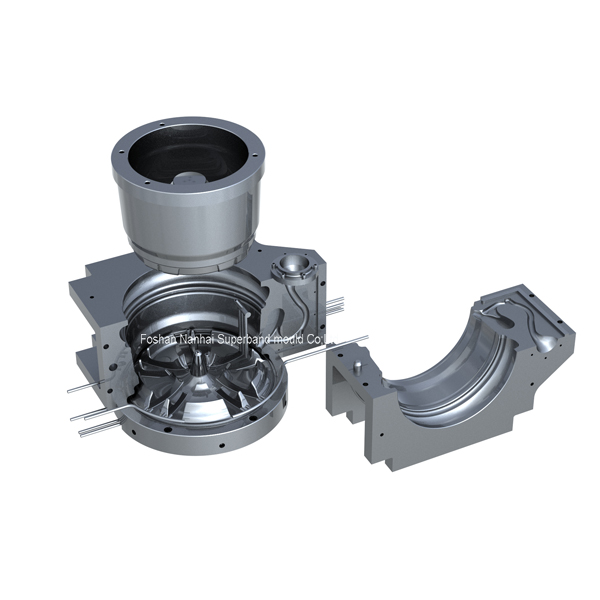
Heavy industry applications represent another massive sector for this tooling. Specialized manufacturing often relies heavily on aluminum components. Automotive suppliers frequently utilize a gravity aluminum auto wheel mold to produce strong, lightweight structural parts. These high-heat applications require highly specific thermal management engineering. When designing an alloy wheel mold, engineers must build distinct venting structures. These vents differ completely from standard plastic injection layouts. The molten metal must cool uniformly. Uniform cooling prevents internal porosity and guarantees structural integrity.
Blow molding and thermoforming stand out as perfect matches for aluminum tooling. Aluminum remains the undisputed industry standard across these sectors. Both processes operate under very low clamping pressures. Because pressure remains low, tool wear is nearly non-existent. Moreover, blow molding demands extremely rapid cooling cycles. Aluminum pulls heat away from the formed plastic incredibly fast. This physical property shrinks cycle times and dramatically boosts daily production output.
Building a reliable production tool starts from the ground up. The absolute foundation is proper alloy selection. You cannot simply order generic aluminum blocks and expect high-performance results. Choosing the correct metallurgical grade dictates the total lifespan of your tool.
| Alloy Grade | Primary Characteristics | Best Manufacturing Application |
|---|---|---|
| QC-10 / Alumec 89 | High strength, exceptional dimensional stability, machines cleanly. | Standard injection molding for consumer plastics. |
| 7075-T651 | Aerospace-grade, superior tensile strength, highly durable. | High-pressure applications and heavy industrial components. |
| 6061-T6 | Cost-effective, highly machinable, lower overall yield strength. | Low-pressure blow molding or vacuum thermoforming. |
You must document exact surface finishes. Defining your custom aluminum mold specifications protects your initial investment. Bare aluminum scratches easily on the shop floor. To increase longevity, engineers frequently apply hard anodizing treatments. Anodizing alters the surface chemistry. It creates a hardened outer layer. Another excellent option is nickel-PTFE plating. This plating adds crucial lubricity. Parts release from the cavity much easier. It also prevents corrosion caused by aggressive resin off-gassing.
Cooling channel design requires intense attention during the early engineering phase. Aluminum conducts heat up to four times faster than standard P20 steel. We can leverage this massive thermal conductivity to optimize cycle times. However, you must design the water channels correctly. Fluid dynamics matter immensely. If you push cold water through the mold too fast, you risk sudden condensation on the cavity surface. Condensation drops water onto the plastic. This ruins part finishes and causes unsightly watermarks. Proper DFM balances flow rates to ensure dry, rapid, and highly profitable cycles.
Every engineering decision involves trade-offs. You must understand the hidden risks before committing your capital. Tool wear and parting line flash represent the most common operational headaches. Under high clamping pressures, aluminum parting lines degrade over time. The compressive yield strength of aluminum is lower than steel. When the mold halves no longer seal perfectly, molten plastic escapes the cavity. This creates thin webs of flash. You must then trim this flash manually. Manual trimming slows down assembly and drives up your labor costs.
Routine maintenance requirements differ significantly from steel tools. You must implement strict preventative maintenance schedules immediately. Aluminum tools demand much gentler handling on the production floor. Standard cleaning procedures often involve harsh steel wire brushes. These brushes will scratch an aluminum cavity surface instantly. Scratches transfer directly onto your molded parts. Train your press operators properly. They must use soft brass tools, cotton wipes, and approved non-caustic chemical cleaners.
We must also address a common industry misconception. We call it the "high-volume" fallacy. Some ambitious suppliers promise millions of successful shots from a basic aluminum tool. You should view these claims skeptically. Without heavy surface treatments, aluminum simply will not survive millions of cycles. To extend tool life realistically, experienced engineers insert hardened steel components into high-wear areas. Gates, runners, and sharp geometric corners experience high shear stress. Steel inserts protect these vulnerable zones. This hybrid tooling approach blends the cooling speed of aluminum with the rugged toughness of steel.
Choosing the right manufacturing partner mitigates risk. It also ensures long-term project success. You need a partner who understands both engineering theory and harsh production realities. Do not base your decision solely on the lowest quote.
First, thoroughly evaluate their engineering department. A truly qualified custom aluminum mold supplier must offer upfront mold flow analysis. This specialized software simulates exactly how material enters the cavity. Thorough DFM feedback predicts warpage, shrinkage rates, and complex thermal dynamics. They should provide this analytical data long before any metal is cut.
Next, consider the massive benefits of in-house CNC machining. Partnering with a supplier who maintains their own equipment guarantees better quality control. Look for shops capable of holding tight tolerances, such as +/- 0.001 inches. High-speed multi-axis CNC machines yield superior surface finishes. They also ensure faster turnarounds. When a supplier outsources the machining phase to a third party, you lose control over scheduling. You also risk intellectual property leaks.
Quality assurance standards separate average shops from elite manufacturing partners. Look for current ISO certifications. ISO 9001 demonstrates a commitment to repeatable processes. Ask for transparent inspection reporting. Request detailed CMM (Coordinate Measuring Machine) reports. These documents prove scientifically that the finished tool matches your initial CAD geometry perfectly.
To secure an accurate and actionable quote, you must provide clear documentation. Buyers need to prepare specific inputs.
Requesting an aluminum tool represents a highly strategic business decision. It is the absolute right choice when speed, upfront cost savings, and mid-volume production intersect. You free up valuable capital while accelerating your product launch timeline significantly. Aluminum bridges the painful gap between fragile prototypes and expensive steel production tools.
However, this strategy requires strict engineering discipline. Success hinges entirely on realistic volume expectations. It also requires precise upfront engineering. You cannot skip DFM analysis and expect a flawless production run. Focus intensely on selecting the right alloy. Design smart cooling channels to maximize thermal efficiency. Finally, protect high-wear areas to extend the tool's lifespan.
Take the next logical step today. Submit your 3D CAD files to a trusted manufacturing partner. Request a comprehensive technical review. Ask for a full DFM analysis and a definitive tooling quote. Proactive planning guarantees a smooth, highly profitable production launch.
A: The lifespan depends strictly on the material and process. Expect 10,000 to 50,000 shots for standard plastic injection molding. You can achieve much higher volumes by applying hard anodized coatings. Lower-pressure processes, like blow molding or thermoforming, allow the tool to last significantly longer, often exceeding 100,000 cycles.
A: Yes, it is possible, but we highly discourage it without modifications. Fiberglass acts as a harsh abrasive. It will degrade bare aluminum quickly. If you must run glass-filled resins, you need to install hardened steel inserts at high-wear points, particularly near the gates and runners.
A: You must clarify the difference between upfront tooling cost and per-part cost. Aluminum tooling is typically 30% to 50% cheaper upfront due to faster machining times. However, hardened steel may offer a lower per-part cost over time if you produce extremely high volumes exceeding hundreds of thousands of parts.
A: Lead times are significantly faster than steel. You can typically expect a timeframe of 2 to 5 weeks. The exact schedule depends heavily on part complexity, surface finish requirements, and the specific supplier's current manufacturing backlog.


