

Views: 0 Author: Site Editor Publish Time: 2026-08-26 Origin: Site


Sourcing a mold stands as a heavy capital expenditure. Ambiguous requirements directly cause production delays. They also lead to excessive flash and premature tool failure. Moving from product design to mass production is rarely simple. You must accurately translate part geometry into strict tooling specifications. A single miscalculation during this phase can jeopardize an entire manufacturing run. An airtight Request for Quotation (RFQ) protects your financial investment. It forces vendors to align strictly with your production realities. This guide breaks down the exact technical criteria you need. We deeply explore material selection, thermal management, and vendor-evaluation standards. You will learn how to source high-yield tooling effectively. You will also discover actionable ways to minimize scrap rates and extend overall tool life. Following these guidelines ensures reliable, smooth production launches.
Premium tool steel (e.g., certified H13 or DIEVAR) and documented heat treatment are non-negotiable for extending mold lifespan and preventing thermal fatigue.
Thermal management (cooling line layout) and gating design dictate both cycle time and part integrity.
Evaluating a supplier requires auditing their Design for Manufacturability (DFM) process, compliance standards (PPAP/APQP), and in-house testing capabilities.
Total Cost of Ownership (TCO) includes tooling maintenance, spare parts, and downtime—not just the initial mold price.
Procurement teams often face a difficult gap between the lowest initial bid and the lowest lifetime operational expense. Cheap molds frequently trigger high scrap rates. They also run at slower cycle times. A minor upfront saving quickly evaporates when maintenance issues halt your assembly line. You must frame tool sourcing around long-term profitability.
You must establish strict performance benchmarks before sending out an RFQ. Vendors need to know exactly how you define a successful tool. Focus on these three critical areas:
Guaranteed Tool Life: State the expected number of shots before a major overhaul. An inferior tool might fail at 50,000 shots. A well-engineered tool easily surpasses 150,000 shots. You should demand a clear warranty covering this lifespan.
Cycle Time Efficiency: Time directly equals money in mass production. Tool design must support rapid cooling and swift part ejection. Efficient thermal transfer allows operators to meet tight unit cost targets.
Scrap Rate Reduction: Precise venting and robust structural rigidity minimize internal porosity. They also prevent excessive flash along the parting line. A rigid tool prevents dimensional warping during high-pressure injection.
Common Mistake: Buyers often accept vague lifespan estimates. Always define tool life in specific shot counts. Require the vendor to specify which components wear out first.
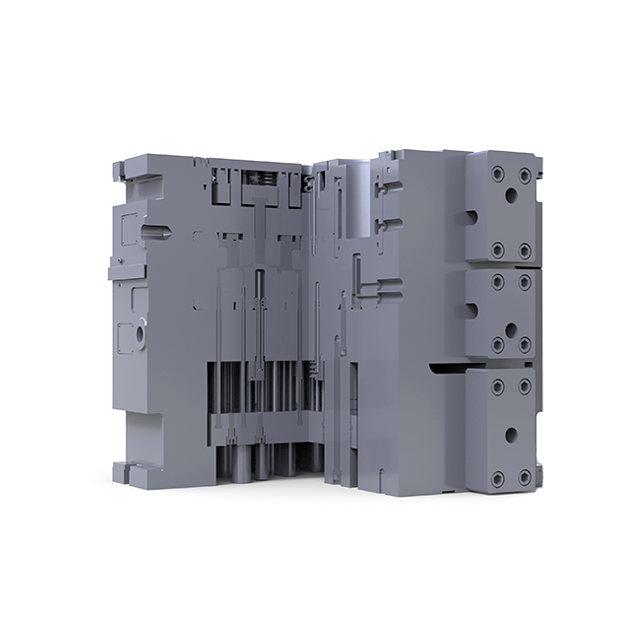
Your RFQ must leave no room for interpretation. When you design a pressure die casting mold, the core blocks endure extreme thermal stress. Precise specifications safeguard your production schedule.
Material selection dictates how long your tool survives. You must require NADCA (North American Die Casting Association) compliant materials. Substandard steel degrades rapidly under cyclic heating and cooling.
Specify premium steel for the core and cavity blocks. Acceptable grades include Premium H13, 1.2344, or DIEVAR. For secondary components like the mold base, you can specify cost-effective P20 steel.
Steel Grade | Primary Application | Key Benefit |
|---|---|---|
Premium H13 (1.2344) | Core and Cavity Blocks | Excellent balance of toughness and heat checking resistance. |
DIEVAR | High-Stress Areas | Superior thermal fatigue resistance and high ductility. |
P20 | Mold Base / Support | Cost-effective structural support for non-contact areas. |
You must define whether you need a single or multi-cavity layout. Base this decision on your annual volume requirements. Also, consider the press tonnage capacity at your designated production facility. Multi-cavity tools reduce unit costs but require massive clamping forces.
Cooling channel placement dictates part integrity. You need robust requirements for flow rates and channel routing. Consider conformal cooling for complex geometries. This prevents hot spots and soldering on the tool surface.
Never allow a vendor to cut steel blindly. Set strict expectations for flow simulation. Software like MAGMASOFT validates fill times. It also models air evacuation patterns. You must review these simulations to ensure optimal gating design.
Standard specifications fall short when components face extreme operational demands. High-performance parts require specialized engineering adjustments. You must detail these needs clearly in your technical documentation.
Some components demand absolute structural integrity. Engine blocks and safety-critical parts leave no room for error. If you are sourcing a high pressure aluminum automotive wheel stator, you must mandate rigorous density checks. The tool design must accommodate high intensification pressures to pack the metal tightly.
Many modern parts require subsequent heat treatment or welding. Trapped gas porosity ruins these processes. You must specify if the high pressure die casting mold must integrate vacuum assist systems. Vacuum blocks draw air out of the cavity just before injection. This integration requires precision machining on the parting line.
Define all critical-to-quality (CTQ) dimensions upfront. You must establish strict draft angles to prevent parts from sticking. Additionally, require specific surface treatments. Nitriding or PVD coatings significantly resist erosion and solder buildup.
Best Practice: Always attach an annotated 3D CAD model. Highlight the CTQ dimensions in red. Provide explicit tolerance bands for these specific features.
Selecting the right partner is just as important as the design itself. A beautiful CAD model means nothing if the shop cannot execute it. You must rigorously vet their engineering and physical assets.
A highly qualified pressure die casting mold supplier acts as a consultant. They must provide comprehensive DFM feedback. Expect them to present detailed mold flow analysis reports. They should also provide full 3D models of the tool design before finalizing any contract.
You must verify their physical infrastructure. Ask the following questions during your audit:
Do they own in-house CNC machining centers and EDM equipment?
Do they utilize high-tonnage spotting presses to verify parting line shut-offs?
Can they perform T1 (first tool) sampling on a machine matching your target production tonnage?
Outsourcing T1 sampling introduces unnecessary delays. In-house testing ensures faster troubleshooting.
Demand documented compliance. Require ISO 9001 or IATF 16949 certifications. These frameworks guarantee standardized manufacturing processes. Furthermore, the supplier must demonstrate a proven track record executing the Production Part Approval Process (PPAP).
Do not assume you own the design files. You must explicitly define who owns the IP and the native CAD files. Establish clear terms for tool life warranties. Outline exactly who handles routine maintenance and repairs.
Many buyers celebrate a low initial purchase order. They later face crippling hidden expenses. You can mitigate these implementation risks through proactive contracting.
Die casting is violent. Core pins break. Ejector pins bend. You must mandate spare parts in the initial delivery. Demand extra core pins and inserts for known high-wear areas. Having spares on hand eliminates weeks of downtime.
Unverified heat treatment causes early heat checking. It also leads to catastrophic block cracking. You cannot visually inspect heat treatment quality. Therefore, demand independent material certifications. Require detailed heat treatment charts from the vendor's furnace cycles. Trusting unverified steel is a massive financial risk.
Downtime destroys profit margins. Ensure your pressure die casting mold specifications include modular design requirements. Mechanics should easily replace wear parts. They must perform this maintenance without removing the entire tool from the press. Front-loading inserts saves countless hours during production runs.
Sourcing reliable tooling demands extreme attention to detail. You must transition away from purely price-based purchasing. Base your final vendor selection on their upfront engineering rigor. Prioritize suppliers who provide transparent DFM feedback and mold flow simulations. Demand complete transparency regarding material sourcing and heat treatment certifications. Ensure they offer localized support and clear warranty terms.
Your immediate next step requires standardization. Draft a comprehensive tooling specification sheet based on these guidelines. Require all potential suppliers to sign a Non-Disclosure Agreement (NDA). Only then should you initiate the DFM audit phase. Taking these decisive actions safeguards your investment and guarantees long-term manufacturing success.
A: Aluminum molds typically last between 50,000 and 150,000 shots. Zinc molds can exceed 500,000 shots due to lower melting temperatures. Lifespan depends heavily on the tool steel quality, casting alloy, and thermal fatigue. Strict maintenance schedules, stress relieving, and proper cooling water management significantly extend operational life.
A: You must demand official mill certificates directly from the steel manufacturer. Ensure the material complies with NADCA standards. You should also request independent third-party lab testing. These tests verify core hardness and microstructure. Do not rely solely on supplier promises for critical core and cavity blocks.
A: A standard custom mold requires 6 to 12 weeks for completion. The timeline depends on part complexity and mold size. Design for Manufacturability (DFM) approvals often take one to two weeks. CNC machining and EDM processes consume the bulk of the schedule. Complex multi-cavity tools push lead times closer to 12 weeks.


