

Views: 0 Author: Site Editor Publish Time: 2026-11-03 Origin: Site


A transmission housing is far more than a simple enclosure — it is the structural backbone of the entire transmission system. Its key roles include:
Precisely locating internal shafts and bearings to support dynamic loads during power transmission
Containing lubricating oil and sealing out dust, dirt and external contaminants
Dissipating heat generated by gear operation to maintain stable operating temperatures
Even minor misalignment of bearing bores will cause uneven gear meshing, increased noise, accelerated wear and premature equipment failure. For this reason, transmission housings are precision components with strict tolerances for hole positions, mounting faces and sealing surfaces.
Key takeaway: The three core values of a transmission housing are alignment accuracy, lubrication sealing and thermal management. Every manufacturing decision should be made to protect these three functions. |
Cast iron was the dominant material for transmission housings for decades. Today aluminium has taken the largest market share, as its performance trade-offs are highly favourable, especially for applications where weight and thermal management matter.
Lightweight: Aluminium has roughly one-third the density of steel. A lighter housing reduces overall vehicle weight, simplifies assembly line handling and lowers load on mounting frames.
Thermal conductivity: Aluminium conducts heat far better than iron, keeping oil temperatures lower under continuous load.
Corrosion resistance: A natural oxide layer protects the base metal, and additional coatings provide further protection.
Design flexibility: Molten aluminium fills thin walls, ribs and oil galleries in a single shot — features that would be prohibitively expensive to machine from solid metal.
Machinability: Bores and faces can be cut quickly, reducing secondary operation time.
Recyclability: Scrap and returned parts can be remelted and reused directly.
Aluminium does have limitations. It is lower in hardness than iron, and thin sections are less rigid under repeated loading, so designers add ribs and thicker bosses around load-bearing seats. Cast iron still dominates in extremely heavy-duty industrial gearboxes. For most automotive, agricultural and light-to-medium industrial applications, however, aluminium is the more rational choice — which is why most buyers now source from aluminium die casters rather than iron foundries.
Pure aluminium is too soft for structural applications. Manufacturers use silicon-rich alloys, which flow well in the die and exhibit minimal shrinkage during solidification. Four grades are used repeatedly across the industry:
ADC12: An Al-Si-Cu alloy widely used in high-pressure die casting. It fills complex dies easily and delivers good strength at a low weight.
A380: A close equivalent with similar chemistry, chosen for housings that require a balance of strength, pressure tightness and cost.
LM24: A British-standard die casting alloy valued for its fluidity and dimensional stability.
LM6: A high-silicon alloy with excellent castability and corrosion resistance, typically used for heavier parts cast via gravity or low-pressure methods.
Alloy selection depends on casting process, wall thickness, load requirements and operating environment. A capable aluminium transmission housing manufacturer will recommend the appropriate grade after reviewing drawings and duty cycles. Alloy chemistry should always be verified before each production run, as even minor shifts in iron or copper content can alter casting performance.
Housing production follows a defined sequence. Skipping steps almost always leads to scrap later, so disciplined foundries treat each stage as an independent quality checkpoint.
1. Design review: Engineers evaluate drawings for manufacturability — uniform wall thickness, generous fillets, draft angles for ejection, and ribs where rigidity is required. Fixing a sharp corner on paper costs nothing. Fixing it in tool steel takes weeks.
2. Tooling: The die is the heart of the process. Machined from hardened tool steel, it incorporates the cavity, cooling lines, overflow wells and ejector pins. Suppliers with in-house tooling development can modify dies directly after trials, shortening lead times and keeping design control under one roof.
3. Melting & degassing: Ingots are melted in a furnace under controlled temperature. Dissolved hydrogen and oxide films are removed before the metal reaches the casting machine, as both cause porosity.
4. Casting: Molten metal is introduced into the die via one of three routes, covered in the next section.
5. Trimming & cleaning: Gates, runners and flash are removed. Castings are shot-blasted, sand-blasted or deburred per drawing requirements.
6. Heat treatment (if specified): Some gravity and low-pressure castings receive T6 treatment for increased strength. Conventional high-pressure parts normally skip it, as trapped gas can cause surface blistering.
7. Machining & finishing: Bearing bores, mounting faces and threaded holes are machined to final dimensions, then the housing is coated and inspected.
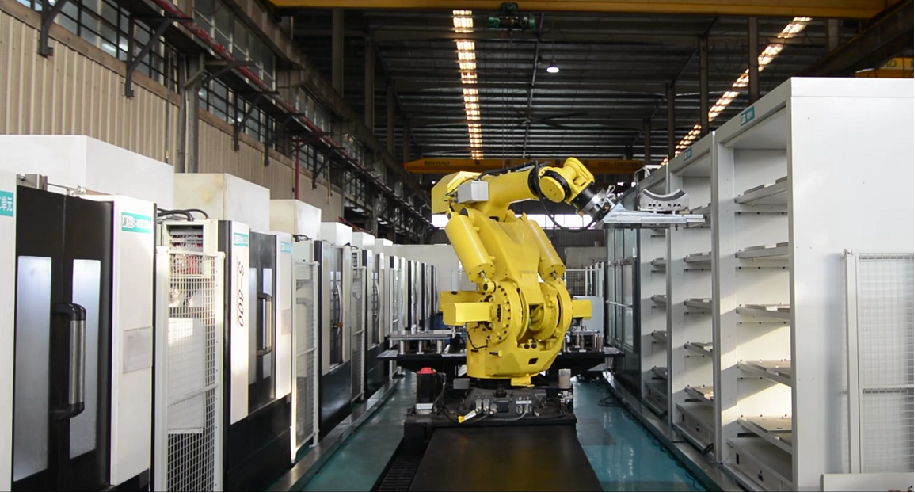
Most housings are produced via three casting routes, each with clear sweet spots:
High-pressure die casting (HPDC): Molten aluminium is injected into a steel die at approximately 1000–1500 bar. It offers short cycle times and smooth surface finish, ideal for high-volume thin-wall housings. The drawback is trapped air; without proper gating and vacuum assistance, thick sections can develop porosity.
Low-pressure die casting (LPDC): Gas pressure of roughly 0.3–1.5 bar gently pushes metal upward into the die. Filling is calm, porosity is low and the structure is denser — a major advantage where oil tightness and strength are critical. Cycle times are slower than HPDC.
Gravity die casting: Metal pours into a permanent mold under its own weight. Equipment is simpler, tooling costs are lower, and parts respond well to heat treatment. It suits medium volumes and heavier sections.
Selection summary: Choose HPDC for high volume and thin walls; LPDC for density and pressure tightness; gravity for medium volumes where heat treatment is required. |
Castings are rarely ready to use straight from the die. Bearing bores require boring to very tight tolerances, ideally in a single clamping to maintain concentricity. Mounting faces are milled flat. Threads are tapped or fitted with inserts for bolts that will be tightened repeatedly. Keeping CNC machining and casting under one roof avoids transport damage and refixturing errors.
Surface finishing follows. Powder coating provides a uniform, durable barrier against moisture, oil and abrasion. Mating faces and drilled holes are masked so coating does not interfere with fit. Some customers prefer wet paint or as-blasted finish, depending on the transmission's application.
Transmission housing failure modes are predictable, so inspections target them directly:
Porosity: Microscopic voids from gas or shrinkage weaken walls and allow oil seepage. Process control, vacuum assistance, X-ray sampling and vacuum impregnation all help mitigate this.
Leakage: Pressure decay or helium testing identifies leaks before assembly.
Dimensional drift: CMM or gauge inspection confirms bore positions, flatness and hole centre distances.
Surface defects: Cold shuts, flow lines and sink marks are visible and affect surface finish performance.
Material mismatch: Spectrometer readings verify alloy matches the order specification.
Reliable manufacturers also issue First Article Inspection Reports for new parts and trace each batch by melt number, so issues can be identified in minutes rather than weeks.
Price is rarely driven by metal alone. When an aluminium transmission housing manufacturer prepares a quote, these factors carry the most weight:
Tooling: The die is a one-time investment amortised across the order. Higher volume means lower per-unit tooling cost.
Part size & weight: Larger housings require bigger machines and more metal.
Alloy & process: Low-pressure and gravity cycles run slower than high-pressure, changing per-piece cost.
Machining content: More holes, faces and threads mean more spindle time.
Finishing & testing: Powder coating, leak testing and impregnation each add a process step.
Sharing annual volume up front helps suppliers select the process that keeps total cost reasonable.
Aluminium transmission housing manufacturers typically serve these sectors:
Automotive: Manual and automatic transmission housings, reduction gear units for EVs
Two-wheelers & light vehicles: Gearbox and clutch covers
Agriculture: Tractor and implement drive housings
Industrial equipment: Helical and worm gearboxes for conveyors, mixers and pumps
Robotics & automation: Compact gear drives where weight and precision matter
Power tools: Motor and gear housings
When screening suppliers, the quote tells you very little. These six questions tell you much more:
1. Process range: Can the shop offer high-pressure, low-pressure and gravity casting, so the process fits the part — not the other way around?
2. Tooling: Are dies built and repaired in-house?
3. Machining: Are drilling, milling and tapping performed on site?
4. Documentation: Will you receive first article reports, inspection data and batch traceability?
5. Alloy control: Is chemistry verified before every run?
6. Communication: Will engineers review your drawings and flag design risks before quoting?
A supplier that can answer all six in detail has almost certainly done similar work before.
The value of a transmission housing lies in alignment, sealing and thermal control — all of which are determined before the first part comes off the machine. Process, alloy, tooling and inspection plan matter more than any single price line. That is why choosing the right manufacturer deserves careful attention.
Plasma Aluminium Diecasting brings together everything buyers expect from an aluminium transmission housing supplier. Customers receive:
Three casting routes: high-pressure, low-pressure and gravity die casting, so the process matches the part
In-house tooling: direct die development and modification, saving time after trial runs
Alloy selection: ADC12, A380, LM6 and LM24, with chemistry verified before production
On-site finishing: CNC machining and powder coating, so parts arrive ready for assembly
Documented quality: first article reports, in-process monitoring, dimensional inspection and batch traceability
Founded by Prasanna Kumar Tiwari with over 35 years of manufacturing experience, the company was built to close the gap between growing manufacturing demand and reliable local supply. If you have housing drawings or samples, you can submit them for design review and quotation.
Q: What casting process is used for aluminium transmission housings?
A: High-pressure die casting is common for high-volume thin-wall housings. Low-pressure and gravity casting are suitable for parts requiring denser metal, better oil tightness or heat treatment. The right choice depends on volume, wall thickness and load.
Q: What alloys are used for transmission housings?
A: ADC12 and A380 are widely used for die cast housings, as they fill dies well and offer good strength-to-weight ratio. LM24 serves a similar role. LM6 is typically used for heavier parts where corrosion resistance is important.
Q: How do manufacturers prevent leakage?
A: Foundries control melt quality, die design and gating to reduce porosity, then test finished parts for leaks. Vacuum impregnation can seal remaining micro-porosity before assembly.
Q: Can aluminium replace cast iron in transmission housings?
A: Yes, for most automotive, agricultural and light-to-medium industrial gearboxes. Aluminium is lighter and dissipates heat better. Very heavy, high-torque equipment may still require cast iron — always verify load requirements with a design engineer.


