

Views: 0 Author: Site Editor Publish Time: 2026-06-24 Origin: Site


Confusing "dies" and "molds" isn't merely a semantic error. This common mix-up fundamentally alters tooling budgets, lead times, and overall production capabilities. While procurement teams often use the terms interchangeably in daily conversations, manufacturing engineers draw a strict line. They base this critical distinction on injection pressure, material state, and core process mechanics. Choosing the wrong tooling approach can lead to catastrophic project delays. It can also compromise part integrity severely.
This article provides a transparent, engineering-backed framework to help you navigate these choices confidently. You will learn exactly which tooling path aligns perfectly to your volume needs. We will examine your tolerance limits and strict financial thresholds. We will break down the mechanics, lifecycle expectations, and structural risks behind these terms. This foundational knowledge clarifies your next major manufacturing decision.
What defines a mold? Gravity rules this domain. Technicians pour liquid metal into a cavity directly. The earth's pull does the rest. Sometimes, engineers apply very low pressure to assist the flow. We see two main categories here. Temporary molds use compacted sand. You destroy them after a single use. Permanent molds use CNC-machined metal cavities. You reuse them thousands of times. We often associate the word "mold" heavily with plastics. Injection molding dominates that specific space. In metallurgy, molds strictly handle gravity-fed or low-pressure tasks.
What defines a die? Extreme pressure defines this tool completely. Machines force liquid metal into a cavity violently. The injection velocity is staggering. This intense environment requires incredibly robust materials. Engineers specify hardened tool steel exclusively. H13 steel serves as the global standard. It survives millions of repeated mechanical impacts. It withstands massive thermal shock constantly. The steel expands and contracts rapidly. Normal metals would crack instantly under these forces.
Let us address the industry lexicon gap directly. Why do semantics blur across the supply chain? Suppliers face a unique challenge daily. They must speak engineer and procurement languages simultaneously. A supplier might quote a die casting mold intentionally. This blended phrase optimizes their website for search engine visibility. It bridges the gap for buyers relying on layman terminology. Technically, the supplier means a high-pressure die. However, they compromise the vocabulary for commercial clarity. You must look past this technical jargon. Understanding the underlying physics protects your project timeline.
Process context dictates everything. The hard distinction between a mold and a die drives actual physical results. This reality becomes obvious in aluminum alloy casting. Each method yields radically different mechanical properties.
Permanent mold casting relies on gentle physics. It utilizes gravity or controlled low-pressure environments. You will experience slower cycle times overall. The metal takes longer to solidify inside the cavity. However, you secure lower tooling costs upfront. The tool steel does not require extreme hardening processes. This method excels at producing dense structural parts. It ensures minimal internal porosity. The slow fill sequence allows trapped gas to escape naturally. You can safely heat-treat these components later. Consider a standard aluminum alloy wheel mold. Automotive wheels demand absolute structural safety. They require perfect dynamic balance. Low-pressure permanent molding delivers these exact traits consistently. It prevents microscopic voids inside the critical wheel spokes.
High-Pressure Die Casting (HPDC) flips this equation entirely. The process delivers blisteringly fast cycle times. You face a high initial tooling cost initially. Yet, you achieve the lowest possible piece price at high volumes. HPDC excels at creating highly complex geometries. It handles thin-walled features effortlessly. Telecom housings rely on this method completely. Automotive brackets use it extensively across the industry. A dedicated high pressure die casting mold requires brilliant engineering. Designers incorporate complex cooling channels inside the steel block. They add strategic overflow wells along the parting line. These precise features manage the rapid metal injection sequence successfully. They control exactly how the metal freezes.
| Parameter | Permanent Mold | High-Pressure Die (HPDC) |
|---|---|---|
| Fill Mechanics | Gravity / Low Pressure | High Velocity / Extreme Pressure |
| Tooling Cost | Moderate | Very High |
| Porosity Risk | Minimal (Heat-treatable) | Higher (Gas entrapment common) |
| Wall Thickness | Thick walls preferred | Excellent for thin walls |
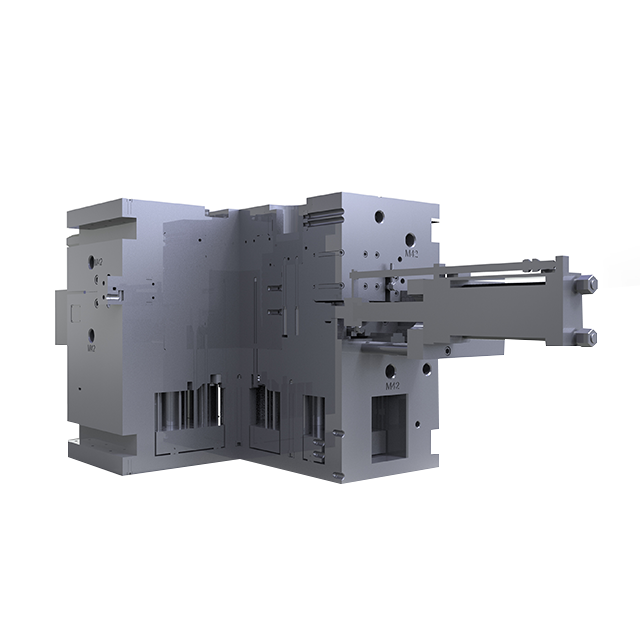
Capital expenditure often dictates the final strategic decision. Contrast the upfront costs carefully. Cutting a die requires a massive financial investment. The raw H13 tool steel costs significantly more. The physical machining process takes longer. The hardened steel wears out CNC cutting bits rapidly. Fabricating a permanent mold requires less capital overall. The tool material remains softer. The machining complexity drops significantly.
You must execute a strict unit economics analysis. Break-even points drive intelligent manufacturing decisions. At what exact production volume does a die become profitable?
Consider these evaluation steps to find your threshold:
| Production Volume (EAU) | Tooling Winner | Economic Rationale |
|---|---|---|
| Under 5,000 units | Permanent Mold | Avoids massive die CapEx; higher unit cost remains acceptable. |
| 10,000 - 20,000 units | Transition Zone | Detailed ROI calculation required based on exact part geometry. |
| Over 50,000 units | High-Pressure Die | High initial cost amortizes perfectly; lowest piece price dominates. |
Tool lifecycle requires strict evaluation too. Dies and molds fail differently over time. Dies suffer from intense thermal fatigue continuously. The rapid heating and cooling cycles crack the steel surface. Dies also experience a damaging phenomenon called "soldering". Molten aluminum chemically attacks the tool steel aggressively. It bonds to the surface permanently. Molds face different degradation mechanics. They degrade from prolonged heat exposure rather than violent injection pressure. You must project the expected shot life for both options accurately.
Tolerance capabilities influence your budget directly. Dies yield near-net-shape components. The parts emerge highly accurate right from the machine. This precision slashes secondary CNC machining needs drastically. Molds lack this extreme dimensional control. The resulting cast parts often need heavier post-cast machining. You must add these secondary tapping and milling operations into your evaluation model.
Metal Injection Molding (MIM) introduces another complex variable. You must understand its specific process distinction. MIM acts as a technological hybrid. It combines plastic injection principles directly. It merges them seamlessly with advanced powdered metallurgy.
A metal injection mold stands entirely apart from traditional die casting. It utilizes standard plastic molding architectures. It does not handle molten metal at all. Instead, it injects a specialized low-temperature feedstock. This feedstock blends microscopic metal powder and a polymer binder. The mold shapes this soft material gently. Later thermal processes remove the binder entirely. High-heat furnaces then sinter the remaining metal powder into a solid state.
How do you choose between MIM and Die Casting? Use this decision matrix:
Implementation risks define your project success or failure. Porosity remains a critical engineering threat constantly. Die casting forces metal into the cavity violently. Air cannot escape fast enough through the vents. The turbulent metal traps this air inside the walls. This creates internal gas entrapment. Permanent mold casting fills the cavity slowly. The liquid metal displaces the air naturally. The resulting cast becomes significantly denser. You avoid massive structural voids. You must validate your chosen process against specific mechanical loads. The wrong choice compromises part integrity forever. You cannot heat-treat highly porous die castings. The trapped gas will expand and blister the part surface.
Tooling ownership terms demand your immediate attention. You pay the supplier to cut the tool. Do you actually own it? Establish clear contract guidelines before issuing purchase orders. Determine who maintains the equipment routinely. Clarify who stores the heavy steel blocks between production runs. State explicitly who owns the physical asset when the project concludes.
Supplier vetting requires aggressive questioning. Do not accept vague promises. Ask these specific questions:
In-house maintenance prevents long production delays. Guaranteed shot life protects your long-term manufacturing budget. Accurate mold flow simulations prevent costly tooling revisions later.
We reach a clear summary verdict. The choice between a die and a mold involves a strategic compromise. You choose between immense production velocity and lower upfront structural risk. Dies offer unmatched speed and the lowest piece prices available. Molds offer superior structural density and lower capital entry points.
Your next steps require precise communication. Encourage your engineers and procurement teams to align fully. Stop arguing over semantic differences. Instead, provide suppliers with highly actionable data. Deliver exact Annual Estimated Usage (EAU) figures. Outline your specific mechanical load requirements clearly. Disclose your target unit costs upfront. These precise metrics determine the right tooling strategy automatically.
Take decisive action on your upcoming project. Submit your 3D CAD files to a trusted manufacturing partner today. Request a comprehensive manufacturability review. Demand a transparent, engineering-backed tooling strategy assessment immediately.
A: It serves as a blended term for commercial clarity. Global supply chains rely on recognizable keywords. Search engines also prioritize these combined phrases heavily. The term merges the precise process of die casting with a universally understood word for a cavity. This compromise ensures global buyers and regional suppliers communicate effectively.
A: Emphatically no. The processes demand entirely different internal architectures. High-pressure dies require premium H13 tool steel. They need complex gating systems and robust structural support blocks. Gravity tools cannot withstand high injection pressures. They will fail catastrophically if subjected to intense die casting forces.
A: Standard permanent molds provide the most economical path. Sand casting molds also offer excellent low-volume value. They require significantly lower engineering time upfront. Their physical machining costs remain minimal compared to high-pressure dies. You avoid the massive capital expenditure required for cutting hardened tool steel.
