

Views: 0 Author: Site Editor Publish Time: 2026-05-19 Origin: Site


Choosing the right tooling for metal manufacturing dictates your entire production lifecycle. Design engineers frequently face a critical crossroad: rely on standard high-pressure systems or invest in advanced evacuation technology.
In industrial metal casting, "vacuum die casting" refers strictly to an HPDC process augmented with a high-vacuum system to evacuate gas from the mold cavity. This is completely distinct from silicone-based polyurethane vacuum casting used for rapid prototyping. The core business problem centers on balancing your initial tooling investment against strict demands for structural integrity, weldability, and low scrap rates.
In this guide, you will learn the exact mechanical differences between a standard HPDC Mold and a specialized vacuum die casting mold. We will explore total cost of ownership, performance outcomes, and how to confidently select the right path for your project.
Process Reality: Standard HPDC molds are fast and economical but trap air due to turbulent injection; vacuum die casting molds actively extract air to virtually eliminate porosity.
Performance Outcomes: Parts from a vacuum die casting mold can be welded and undergo high-temperature heat treatments (like T6); standard HPDC parts typically cannot due to blistering risks.
Cost Implications: Vacuum molds carry a higher Total Cost of Ownership (TCO) due to specialized sealing, vacuum valves, and increased maintenance, but deliver higher ROI for safety-critical components by reducing scrap and enabling thinner, stronger walls.
Tooling geometry forms the foundation of any successful casting operation. The physical mechanics vary greatly between traditional and advanced evacuation setups. Understanding these mechanical principles helps you avoid expensive tooling mistakes later in production.
Standard processes rely heavily on massive clamping forces. Manufacturers use high-tonnage machines to hold the tool closed against extreme internal pressures. The system injects molten metal rapidly at 10,000 to 20,000 psi. These systems use passive venting networks to manage displaced air.
Engineers machine strategic overflow channels into the parting line. These channels provide an escape route for gases. However, injection happens in mere milliseconds. This intense speed creates violent fluid turbulence. Air mixes aggressively into the molten alloy. Trapped gases become completely unavoidable under these conditions. Consequently, standard parts suffer from inherent internal porosity. This limits their structural load capacity.
Advanced evacuation systems build upon standard HPDC architecture. Toolmakers still utilize premium hardened tool steels like H13. H13 withstands severe thermal fatigue and high injection pressures. The major difference lies in cavity isolation.
Engineers design a hermetically sealed cavity. They install high-temperature O-ring seals around the parting lines. The design also features specialized vacuum valves. Manufacturers typically use passive chill blocks or active mechanical shut-off valves. These valves shut in milliseconds when molten metal reaches them.
The system requires precise vacuum sensors and dedicated extraction channels. An external pump activates exactly as the plunger moves forward. This sequence pulls out 90% to 95% of the ambient air. Crucially, this extraction occurs entirely before the metal fills the cavity. The result is a profoundly dense metallic structure.
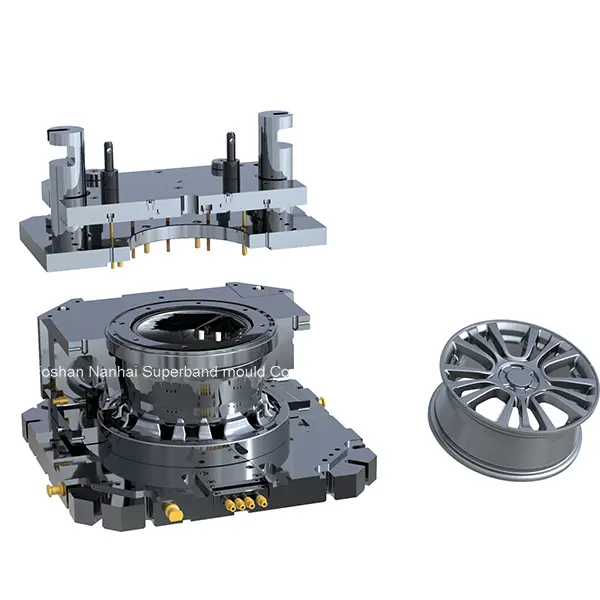
Your engineering requirements dictate your manufacturing process. We must evaluate how specific tooling features translate into tangible physical outcomes. The differences become obvious when analyzing structural integrity, post-processing capabilities, and dimensional limits.
Feature & Metric | Standard HPDC Tooling | Vacuum Assisted Tooling |
|---|---|---|
Porosity Level | Micro-porosity present. Air entrapment unavoidable. | Virtually eliminated. Dense internal grain structure. |
Heat Treatment | Cannot undergo T6. High risk of surface blistering. | Fully supports T6. Maximizes yield strength. |
Weldability | Notoriously difficult. Weak weld joints. | Excellent. Standard MIG/TIG welding processes apply. |
Minimum Wall Thickness | Moderate limits due to back-pressure resistance. | Reaches 0.75mm or less. Superior flow dynamics. |
Dimensional Tolerance | ±0.05 mm to ±0.2 mm. Highly accurate. | ±0.05 mm to ±0.2 mm. Equal or slightly better consistency. |
Standard casting leaves internal micro-porosity. This reality is perfectly acceptable for cosmetic parts. General enclosures or low-stress brackets handle micro-porosity without failing. However, vacuum extraction creates highly dense components. It eliminates the trapped air bubbles. This density makes the components suitable for heavy load-bearing applications. It also creates pressure-tight boundaries for hydraulic parts.
Post-processing defines advanced automotive and aerospace manufacturing. Standard parts cannot undergo rigorous high-temperature heat treatments like T6. When exposed to high heat, the trapped internal gases expand rapidly. This expansion causes severe surface blistering and structural warping. They are also notoriously difficult to weld reliably.
Vacuum parts behave differently. Their high internal density safely allows for advanced heat treatments. Engineers use T6 cycles to drastically improve yield strength and elongation. Furthermore, you can apply standard welding processes. Vacuum parts integrate seamlessly into larger welded chassis assemblies.
Both methods offer excellent dimensional accuracy. You can routinely achieve tight tolerances ranging from ±0.05 mm to ±0.2 mm. They both deliver superior surface finishes straight from the press. However, vacuum assistance allows for even thinner walls.
Evacuating the air removes internal flow resistance. Molten metal travels further before solidifying. This dynamic allows engineers to design incredibly thin walls down to 0.75mm or less. Thin-wall capabilities drive massive weight reductions in electric vehicle applications.
Capital decisions require a deep understanding of Total Cost of Ownership (TCO). You must look beyond the initial tooling quote. You must evaluate cycle times, reject rates, and long-term maintenance costs. Value emerges over the lifetime of the project.
Standard tools are already capital-intensive investments. Toolmakers require hundreds of hours to CNC machine complex geometries. Adding evacuation capabilities increases this initial tooling cost significantly. You must purchase specialized peripheral equipment.
The tool requires complex O-ring seal grooves along every mating surface. You must integrate expensive valve mechanisms into the block. Furthermore, you must purchase or lease the external vacuum pump system itself. Expect a notable premium on your initial CapEx.
Cycle times dictate daily factory output. The evacuation sequence adds a fraction of a second to each cycle. The machine must pause briefly to pull the vacuum before injection. Therefore, vacuum processes run technically slower per shot.
However, you must consider effective throughput. Vacuum tools drastically reduce defect and scrap rates. You throw away far fewer parts for porosity failures. This reduction in scrap often results in a higher effective yield. You ultimately produce more compliant parts per shift for strict-tolerance projects.
Tooling longevity protects your investment. Both standard and advanced tools typically yield 50,000 to 100,000+ shots for aluminum alloys. Zinc applications yield substantially higher shot counts. However, vacuum tools demand much stricter preventative maintenance.
You must keep the peripheral seals perfectly intact. You must prevent aluminum flash from clogging the delicate valves. Neglecting maintenance degrades the vacuum effect rapidly. Your expensive tool quickly reverts to producing standard-quality parts.
Theoretical benefits mean little without strict factory discipline. Introducing vacuum technology introduces new operational risks to the factory floor. Engineers must account for extreme temperatures and volatile fluid dynamics. We highlight three major implementation realities.
Seal Degradation: Maintaining vacuum integrity represents your primary operational risk. High-pressure injection stresses the tool constantly. Worn O-rings fail to hold the negative pressure. Misaligned parting lines create microscopic air leaks. These leaks immediately degrade the evacuation effect. If seals fail, you simply cast standard porous parts at a higher operational cost. Operators must monitor vacuum gauges continuously.
Valve Maintenance (Clogging): Molten aluminum enters the cavity at approximately 700°C. It travels at staggering speeds of 30 to 80 meters per second. This fast-moving, aggressive metal easily bypasses worn chill blocks. It can quickly jam mechanical shut-off valves through a process called soldering. Rigorous daily cleaning schedules are absolutely mandatory. A jammed valve ruins the entire extraction sequence.
Process Parameter Sensitivity: Advanced casting requires highly synchronized machine controls. You need robust PLC (Programmable Logic Controller) integration. The PLC must trigger the external pump exactly as the injection plunger passes the pour hole. It must close the valves milliseconds before the metal arrives. Sub-par machine calibration ruins the yield. Timing errors result in sucked metal or incomplete air evacuation.
Engineering teams must justify their tooling investments objectively. The decision relies entirely on the final application of the cast component. You must align your tooling strategy with your primary success metrics. Use this framework to guide your procurement discussions.
High-Volume Consumer Electronics: Laptop chassis, smartphone frames, and heat sinks rarely require extreme yield strengths. Standard tools deliver massive volumes affordably.
Standard Automotive Housings: Gearbox covers, oil pans, and water pump housings tolerate micro-porosity well.
Cosmetic Hardware: Decorative trim, lighting enclosures, and handles prioritize surface finish over internal density.
Cost-Driven Projects: Choose standard tooling when the lowest possible piece-price serves as your primary success metric. Standard tools win when parts are not safety-critical.
Crash-Relevant Automotive Components: Shock towers, subframes, and battery trays demand high energy absorption. They require high elongation and yield strength to keep passengers safe.
Aerospace and Hydraulic Components: Hydraulic valves and aviation brackets require absolute structural integrity. They need high gas and fluid leak tightness under pressure.
Post-Processed Parts: Invest in evacuation technology for parts that must undergo T6 heat treatment. It is also mandatory for parts requiring structural welding to larger assemblies.
We must summarize the essential trade-offs. The choice between these two methods is rarely about which process is objectively "better." Instead, evaluate which process is strictly necessary to meet the component's engineering specifications. Over-engineering your tooling wastes capital, while under-engineering compromises product safety.
Review these final action-oriented takeaways before finalizing your tooling strategy:
Acknowledge the baseline: Standard HPDC remains the absolute workhorse for 80% of commercial manufacturing needs. It delivers excellent speed and surface finish.
Recognize the upgrade path: Vacuum die casting represents the mandatory upgrade for structural, safety-critical, and heat-treatable metal parts. It eliminates performance-limiting porosity.
Calculate the true ROI: Factor in the reduced scrap rates and post-processing capabilities when evaluating the higher initial CapEx of advanced tooling.
Consult the experts early: Encourage your design engineers to consult with a DFM (Design for Manufacturing) specialist immediately. Run comprehensive mold flow simulations before committing capital to either tooling path.
A: Yes, but with strict limitations. You must machine new channels for the vacuum valves and add peripheral O-ring seals. However, a tool designed natively for vacuum extraction performs much more reliably. Retrofits often struggle with parting line sealing, leading to inconsistent air evacuation and higher long-term scrap rates.
A: No. Metal vacuum die casting uses hardened steel tooling to shape molten metal under extreme pressures. Polyurethane vacuum casting (often simply called "vacuum casting") utilizes soft silicone molds to cast liquid plastics. Manufacturers use the polyurethane process primarily for low-volume prototyping, not structural metal production.
A: LPDC naturally minimizes turbulence and porosity through a slow, bottom-up fill (laminar flow) at under 1 bar of pressure. Vacuum HPDC achieves similarly low porosity levels but operates at much faster cycle times. It also accommodates much thinner wall sections, making it superior for high-volume automotive lightweighting.
A: Aluminum alloys like A380 or A356 see the biggest benefits. Magnesium alloys also perform exceptionally well. The evacuation process unlocks their full structural potential. It improves their natural elongation and yield strength, allowing engineers to confidently push the limits of lightweight structural design.


