

Views: 0 Author: Site Editor Publish Time: 2025-10-15 Origin: Site


Ever wondered how automobile aluminum parts are made? Aluminum gravity casting is key in manufacturing strong, precise components. It uses gravity to shape molten metal in reusable molds. In this post, you'll learn about the aluminum gravity die casting process and its vital role in producing quality parts.
Aluminum gravity casting is a method where molten aluminum is poured into a mold, using gravity to fill the cavity. Unlike pressure-based casting, this process relies solely on gravity to move the liquid metal. It uses permanent metal molds, often made of steel or cast iron, which can be reused multiple times. This method allows the metal to cool and solidify naturally, forming the desired shape.
1. Mold Preparation The metal mold is cleaned and coated with a refractory material. This coating prevents the molten aluminum from sticking and helps control cooling rates.
2. Heating the Mold The mold is preheated to a specific temperature. This step ensures better metal flow and reduces thermal shock, improving the casting’s surface finish.
3. Melting Aluminum Aluminum alloy is melted in a furnace until it reaches the required pouring temperature. Careful temperature control is crucial to avoid defects.
4. Pouring The molten aluminum is poured into the mold cavity by hand or automated ladles. Gravity pulls the metal down, filling the mold slowly and evenly.
5. Solidification The metal cools and solidifies inside the mold. The solidification rate affects the grain structure and mechanical properties of the casting.
6. Mold Opening and Removal Once solidified, the mold is opened, and the casting is removed. The mold can be reused immediately after cleaning.
7. Finishing Excess metal, such as sprues or gates, is trimmed off. The casting may undergo further cleaning or machining to meet specifications.
● Permanent Metal Mold: Usually steel or cast iron, designed for repeated use.
● Refractory Coating: Protects the mold and controls cooling.
● Molten Aluminum Alloy: Commonly used alloys include A356, known for good casting properties.
● Pouring Equipment: Ladles or automated pouring systems to transfer molten metal safely.
● Cooling System: Sometimes integrated to control solidification rates.
This process allows for detailed, accurate castings with fewer defects like porosity or inclusions. It also supports complex designs by using sand cores to create internal cavities or undercuts.
Aluminum gravity casting offers several key advantages that make it popular in manufacturing. These benefits include improved surface finish, better mechanical properties, and efficiency in mass production.
One major advantage is the superior surface finish of gravity-cast aluminum parts. Because the molten metal fills the permanent metal mold slowly and evenly under gravity, it reduces turbulence and air entrapment. This leads to fewer surface defects like porosity or rough textures compared to sand casting. The smooth mold surface combined with controlled cooling results in castings that often require less machining or finishing work. This saves time and cost in post-processing.
Gravity casting also produces parts with enhanced mechanical properties. The slow, natural solidification inside metal molds encourages a fine, uniform grain structure. This grain refinement strengthens the aluminum alloy, improving toughness, strength, and corrosion resistance. Additionally, the process reduces internal defects such as gas porosity and inclusions, which can weaken castings. These qualities make gravity-cast parts more reliable and durable for demanding applications.
Another advantage is the efficiency of aluminum gravity casting in mass production. The use of permanent metal molds allows for quick, repeated casting cycles without the need to remake molds like in sand casting. This reduces lead times and lowers per-part costs when producing medium to large volumes. Gravity casting also eliminates the need for expensive high-pressure equipment, simplifying the process and reducing maintenance. For manufacturers, this means faster turnaround and consistent quality at scale.
● Smooth surface finish reduces finishing costs.
● Fine grain structure enhances strength and durability.
● Lower defect rates improve overall casting quality.
● Reusable metal molds speed up production cycles.
● No high-pressure equipment lowers capital and maintenance costs.
These benefits make aluminum gravity casting ideal for parts requiring good aesthetics, mechanical performance, and cost-effective volume production.
Aluminum gravity casting and sand casting are both popular methods for shaping aluminum parts, but they differ in several key ways. Gravity casting uses permanent metal molds, usually steel or cast iron, while sand casting relies on sand molds that are destroyed after each use. This makes gravity casting molds more durable and reusable, ideal for medium to high-volume production.
The surface finish of gravity cast parts is typically much smoother than sand castings. This is because metal molds have smoother surfaces than sand molds. Also, gravity casting cools the metal faster and more evenly, resulting in finer grain structures and fewer defects like porosity. Sand casting, on the other hand, often produces rougher surfaces and requires more machining and finishing work.
Gravity casting allows for more precise and consistent dimensions. Sand casting can vary more due to the nature of the sand mold, which can shift or erode. However, sand casting is more flexible for very large or complex shapes and is generally cheaper for low-volume runs.
The initial cost for aluminum gravity casting is higher because metal molds are expensive to make. These molds require skilled machining and heat treatment. Sand molds are much cheaper and quicker to produce, making sand casting more cost-effective for small batches or prototypes.
However, over time, gravity casting becomes more economical for larger production runs. The reusable molds reduce per-piece cost and improve consistency. Sand casting costs add up with each new mold, especially for large quantities.
Maintenance costs for metal molds exist but are usually lower than the cumulative cost of making many sand molds. Also, gravity casting requires less finishing work, saving time and labor costs.
Parts made by aluminum gravity casting generally have better mechanical properties. The controlled cooling in metal molds produces fine, uniform grains that enhance strength, toughness, and corrosion resistance. The process also reduces internal defects such as gas porosity and inclusions.
Sand cast parts may have coarser grains and more defects, which can reduce strength and fatigue life. They often need additional heat treatment or machining to meet specifications.
Gravity casting excels for parts requiring good surface quality and mechanical performance, such as automotive components or precision machinery parts. Sand casting suits large, complex shapes where surface finish and tight tolerances are less critical.
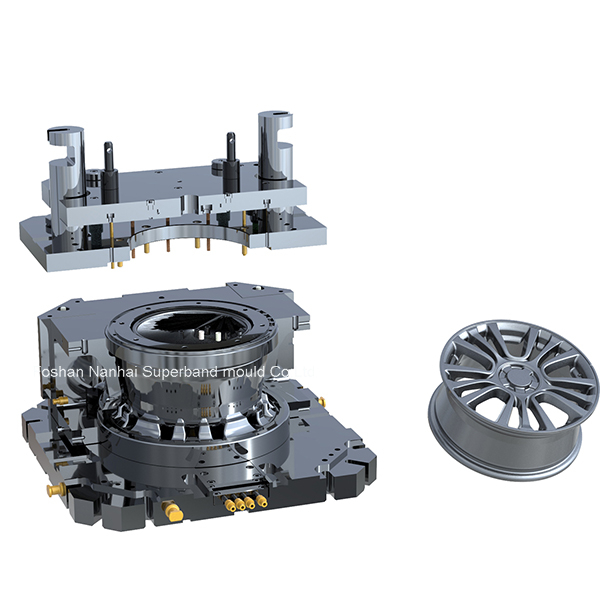
Aluminum gravity casting is widely used across several industries due to its ability to produce durable, precise, and complex parts efficiently. The process suits applications where a good surface finish and mechanical strength are essential.
In the automotive industry, aluminum gravity casting is popular for manufacturing components like engine blocks, transmission housings, and suspension parts. The process helps create parts that are strong yet lightweight, improving vehicle fuel efficiency and performance. Gravity casting also allows for intricate designs, which are necessary for modern engines and chassis components. The fine grain structure and low porosity of gravity-cast parts enhance durability, making them ideal for the demanding conditions vehicles face.
Lighting manufacturers use aluminum gravity casting to produce housings and fixtures. The smooth surface finish achieved through this method reduces the need for additional finishing, saving time and cost. Aluminum’s excellent thermal conductivity helps dissipate heat in lighting fixtures, extending their lifespan. Gravity casting's precision ensures tight tolerances, which is important for assembling electrical components securely. It also allows for decorative designs, making lighting fixtures both functional and aesthetically pleasing.
Aluminum gravity casting is also common in kitchenware production, such as cookware handles, knobs, and other hardware. The process creates parts that resist corrosion and withstand heat, which are critical for kitchen use. Since gravity casting produces smooth surfaces, these components are comfortable to handle and easy to clean. The ability to produce complex shapes means manufacturers can design ergonomic and stylish kitchen parts that appeal to consumers.
Choosing the right aluminum alloy is critical for successful gravity casting. Different alloys offer various strengths, corrosion resistance, and machinability. For example, A356 alloy is popular due to its excellent casting properties and good mechanical strength after heat treatment. The alloy's composition affects how it flows, solidifies, and performs in the final part. Using a poorly suited alloy can lead to defects like porosity, cracking, or weak mechanical properties. Therefore, selecting the alloy that fits the part's functional requirements and casting process ensures durability and performance.
Maintaining quality in aluminum gravity casting involves controlling every step from melting to finishing. The molten metal temperature must be precisely monitored to avoid overheating or underheating, which can cause poor flow or shrinkage defects. The mold's condition also plays a role; it should be clean, preheated, and coated properly to prevent sticking and ensure even cooling.
After casting, removing any excess material and inspecting the part for surface defects, dimensional accuracy, or internal flaws is essential. Techniques such as X-ray inspection or ultrasonic testing help detect hidden porosity or cracks. Heat treatment may follow to enhance mechanical properties and relieve stresses. Consistent quality checks prevent faulty parts from reaching customers and reduce costly rework.
Quality control in aluminum gravity casting is a continuous process. It starts with raw material certification and continues through process monitoring, mold maintenance, and final inspection. Automated sensors can track temperature and cooling rates to keep the process stable. Statistical process control (SPC) methods analyze production data to spot trends or deviations early.
Mold wear and damage must be regularly assessed since defects in the mold surface translate directly to the casting. Proper maintenance extends mold life and keeps casting quality high. Documentation and traceability ensure that each batch meets standards and helps identify root causes if problems arise.
By integrating strict quality control protocols, manufacturers deliver reliable, high-performing castings that meet customer expectations and industry regulations.
Tip: Always verify aluminum alloy specifications and implement real-time process monitoring to maintain consistent casting quality and reduce defects.
Aluminum gravity casting offers many benefits, but it also comes with some challenges that manufacturers must consider before choosing this process.
One of the biggest challenges is the initial cost of metal molds. These molds are made from steel or cast iron and require precise machining and heat treatment. Creating a high-quality mold can be expensive and time-consuming. Unlike sand molds, which are cheaper and disposable, metal molds must be durable enough to withstand repeated use and high temperatures. This upfront investment makes gravity casting less suitable for low-volume or prototype production. However, for medium to large production runs, the cost per part decreases as the mold is reused.
While aluminum gravity casting can produce detailed parts, it has limits on the complexity of shapes it can handle. Permanent metal molds are rigid, so very intricate or highly complex designs may require additional tooling like sand cores to create internal cavities or undercuts. Adding cores increases setup time and cost. Also, some complex geometries might be difficult to fill properly by gravity alone, leading to defects such as cold shuts or incomplete filling. Designers must balance complexity against manufacturability and consider design modifications to optimize casting quality.
Gravity casting is most cost-effective for medium to high production volumes. For small batches, the high cost of metal molds and setup may not be justified. On the other hand, for very large volumes, other casting methods like high-pressure die casting might offer faster cycle times and lower per-part costs. Additionally, the production speed of gravity casting is slower compared to pressure-based methods since it relies on gravity alone to fill molds. Manufacturers should carefully assess expected production volumes and timelines when selecting this process.
Aluminum gravity casting uses gravity to form precise, durable parts with smooth finishes and excellent mechanical properties. This method is ideal for medium to high-volume production and complex designs. As technology advances, aluminum gravity casting will continue to evolve, offering more efficiency and quality. Superband Mould specializes in this casting method, providing high-quality molds that enhance product value and performance. Their expertise ensures reliable, cost-effective solutions for diverse industry needs.
A: Aluminum gravity casting is a method where molten aluminum is poured into a mold using gravity to fill the cavity, forming precise, durable parts like automobile aluminum parts.
A: The aluminum gravity die casting process involves preparing and preheating a metal mold, melting aluminum, pouring it into the mold, allowing solidification, and finishing the casting.
A: Aluminum gravity casting is used for automobile aluminum parts due to its ability to produce strong, lightweight components with excellent surface finish and mechanical properties.


