

Views: 0 Author: Site Editor Publish Time: 2026-07-08 Origin: Site


Specifying the correct casting method dictates much more than the unit output. It determines structural viability, tooling longevity, and final compliance of the manufactured part. Treating general metal injection as a singular process leads to severe production issues. It causes over-engineered molds, unacceptable porosity rates, or misaligned production cycles. You need a transparent, risk-based framework to evaluate these core variants. We aim to ensure your engineering and procurement teams align perfectly on the optimal method. They must carefully consider their specific production volume and mechanical requirements. Failing to evaluate these parameters guarantees high scrap rates. In this guide, you will learn how to evaluate various casting methodologies. We explore volume thresholds, porosity risks, and material compatibility to streamline your next manufacturing project.
Before you review specific processes, you must define the non-negotiable project constraints. Framing the decision early prevents costly engineering revisions later. A successful production run requires aligning your physical part design with the limitations of the chosen manufacturing method. You must evaluate the relationship between your expected output and your capital investment.
Tooling costs for an HPDC mold require minimum order quantities in the tens of thousands. This volume justifies the initial ROI. Lower volumes may necessitate alternative methods entirely. You cannot amortize a massive initial mold cost over a small batch run efficiently. Therefore, defining your projected annual volume serves as the primary filter for your process selection.
Next, determine if the part will undergo heat treatment or welding. You must define your mechanical load and porosity limits clearly. High trapped-gas porosity automatically disqualifies standard high-speed processes. Structural parts requiring high fatigue strength demand processes minimizing internal voids. You also need to assess the required net-shape accuracy. High accuracy minimizes secondary machining operations. You must document these criteria using a structured approach:
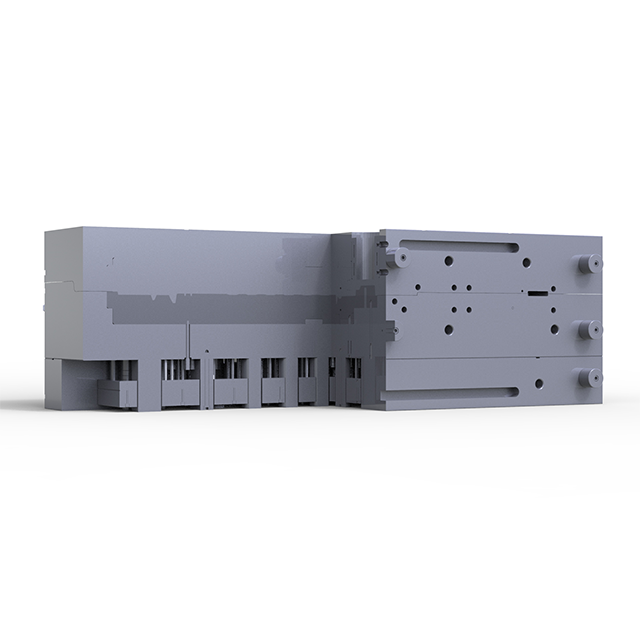
This process represents the industry standard for rapid, high-volume production. It forces molten metal into a steel cavity at extreme velocities. You achieve exceptional net-shape accuracy through this rapid injection. high pressure die casting dominates consumer electronics and light automotive manufacturing.
Engineers split this solution category into two distinct operational models. The alloy type directly dictates the chamber configuration you must use.
You must evaluate this process across several dimensions. It offers exceptional surface finishes and high repeatability. It allows you to cast walls as thin as 1.5mm reliably. However, you must account for distinct implementation risks. High velocity injection causes unavoidable turbulence inside the cavity. This turbulence traps air, leading to microscopic porosity. Therefore, you typically cannot heat-treat (T6) or weld these parts safely. The trapped gas expands and causes blistering.
Capital considerations remain a defining factor. You face high initial design and fabrication costs for the steel molds. However, the process offsets these costs through extremely low per-part costs at a massive scale.
This solution category offers a slower, highly controlled alternative. The machine pushes molten metal upward into the mold cavity. It applies a gentle pressure ranging from 0.02 to 0.1 MPa. This controlled rise heavily contrasts with the violent injection of high-speed methods. You rely on low pressure die casting when internal soundness matters most.
The primary feature-to-outcome benefit centers on laminar flow. Laminar flow means the metal enters the cavity smoothly. It prevents severe air entrapment during filling. You achieve high-density, low-porosity castings as a direct result. This makes the method scalable for specific engineering requirements, though cycle times are significantly longer. Slower cycles naturally lower your overall throughput compared to standard high-speed injection.
Implementation risks require careful attention. The process demands strict thermal management of the die to ensure directional solidification. It is rarely cost-effective for thin-walled cosmetic parts. The slow fill rate causes premature freezing in thin sections. Instead, it serves as the optimal choice for bulky, structural components. Engineers specify it frequently for suspension parts or engine blocks.
Compliance and quality teams strongly prefer this method for safety-critical applications. It remains ideal when certifications demand heat-treatable components. You can confidently apply T6 heat treatments because the parts lack trapped gas pockets.
This advanced solution category combines traditional casting and forging processes. It applies ultra-high pressure during the entire solidification phase. Equipment can apply 100+ MPa to the cooling metal. You effectively compress the material as it changes from liquid to solid. squeeze casting transforms the baseline capabilities of molded metal.
From a performance dimension, this methodology eliminates virtually all micro-shrinkage. It completely eradicates gas porosity. The extreme pressure feeds additional molten metal into areas prone to shrinking. It delivers the highest mechanical properties achievable in a standard cast part. You see these applications heavily in heavy-duty automotive and aerospace sectors. They require maximum fatigue strength for critical load-bearing environments.
The implementation risks remain substantial. You will experience extremely high tooling wear due to the immense pressure constraints. The steel dies undergo severe thermal and mechanical fatigue. Geometric complexity is highly limited compared to standard high-speed processes. Undercuts and complex internal cores are extremely difficult to execute under such pressures.
| Casting Process | Pressure Range | Porosity Risk | Tooling Wear | Best Application |
|---|---|---|---|---|
| High Pressure | 10 - 100 MPa | High | Moderate | Thin-walled enclosures |
| Low Pressure | 0.02 - 0.1 MPa | Low | Low | Engine blocks |
| Squeeze Casting | 100+ MPa | None | Very High | Heavy-duty suspension |
Process and material maintain a strict symbiosis. The process dictates the alloy, and the alloy dictates the process. You cannot swap materials without fundamentally altering the tooling design. Fluidity, shrinkage rates, and thermal conductivity vary wildly between metals.
aluminum pressure casting dominates the cold-chamber high-speed sector. Aluminum provides an exceptional strength-to-weight ratio. It meets the demands of modern lightweighting initiatives perfectly. However, aluminum remains highly sensitive to iron soldering. The molten aluminum attempts to bond with the steel die during injection. If mold coatings aren't strictly maintained, the metal sticks, destroying the tool surface.
Zinc and magnesium act as default choices for hot-chamber operations. Zinc offers superior castability for extremely complex geometries. It easily fills intricate, thin-walled sections without premature freezing. Magnesium provides the lightest possible structural option, though it requires specialized atmospheric controls during melting.
You must implement strict risk mitigation strategies before cutting any steel. Ensure your manufacturing partner validates the alloy's fluidity against the chosen casting process. They must use advanced mold flow simulation software. This verifies shrinkage rates and identifies potential short-shots long before production begins.
You need a logical framework to finalize your Pressure Die Casting methodology. Evaluating the constraints allows you to quickly shortlist the most viable path. Use these parameters to guide your final engineering decisions confidently.
Here is a basic chart outlining your immediate next steps:
| Action Phase | Engineering Task | Quality Focus |
|---|---|---|
| Phase 1: Validation | Request strict DFM feedback on geometry. | Verify draft angles and gate placements. |
| Phase 2: Partner Audit | Review tool maintenance protocols. | Assess routine mold coating procedures. |
| Phase 3: Inspection setup | Establish non-destructive testing rules. | Require X-ray inspection for porosity. |
Take concrete next-step actions immediately following your process selection. Request DFM (Design for Manufacturing) feedback specific to your chosen method. Focus heavily on draft angles, parting lines, and precise gate placements. Finally, audit potential manufacturing partners carefully. Review their tool maintenance protocols and porosity testing capabilities, such as automated X-ray inspection.
Selecting between high pressure, low pressure, and squeeze casting is always a calculated trade-off. You must balance your upfront mold investment against expected cycle times and required mechanical integrity. Each method serves a distinct engineering purpose. You cannot force one method to accomplish the goals of another without severe consequences.
We strongly recommend avoiding over-specification. Do not pay for the low-porosity benefits of slow-cycle or squeeze methods if the component is purely cosmetic. Conversely, never use standard high-speed injection for critical load-bearing geometries. Aligning the physical demands of your part with the realities of the manufacturing floor ensures long-term project viability.
Contact your engineering team for a localized DFM review immediately. Align your part’s specific geometry and annual volume requirements with the optimal process. Early validation prevents costly tooling modifications and accelerates your time to market.
A: High pressure prioritizes rapid speed and thin walls but violently traps air, causing internal porosity. Low pressure uses a slow, highly controlled filling method. This produces dense, heat-treatable, high-strength parts at a significantly lower overall production speed.
A: Traditionally, no. The trapped gas expands rapidly during heat treatment. This expansion causes severe surface blistering and critical structural failure. Vacuum-assisted methodologies are strictly required if heat treatment is a necessary step for your component.
A: You must minimize undercuts to avoid complex slide mechanisms. Standardizing your draft angles and ensuring uniform wall thickness heavily reduces tool wear. These geometric simplifications mitigate severe thermal fatigue across the steel cavity.
A: It requires a cold chamber. Aluminum has a high melting point and becomes highly corrosive in a molten state. This corrosive nature rapidly degrades the submerged internal pumping mechanisms used in hot chamber machines.
